Call us: 303-455-4455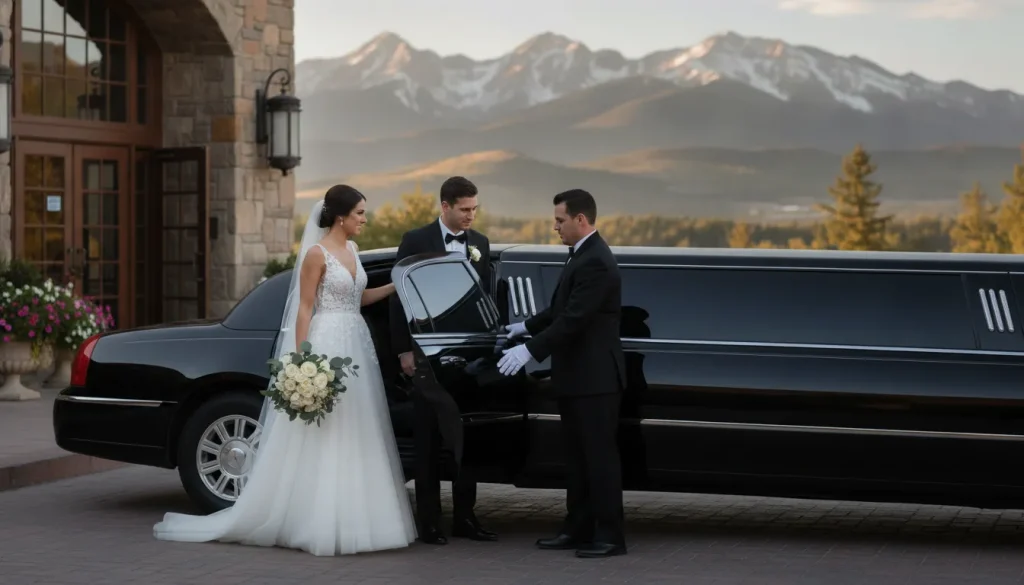
A wedding car with chauffeur should do more than carry people from one address to another. In Denver, it can connect the getting-ready location, first look, ceremony, photo stops, reception, and final departure while your attention stays on the people and moments that matter. The most reliable plan starts with the movement schedule, then matches each movement to the right vehicle and chauffeur instructions.
Request a Denver wedding transportation quote and start planning your route today.
Start With the Wedding-Day Run of Show
Before choosing a limousine, SUV, or larger group vehicle, write down every trip the wedding transportation must support. A couple may need a private ride from a hotel to a first-look location, while the wedding party needs a separate transfer to the ceremony. Guests may need a hotel shuttle, and the couple may need a final getaway ride after the reception. These are different movements with different timing, space, and access requirements.
A simple transportation run of show should include:
- Movement: for example, hotel to ceremony, ceremony to photos, or reception to hotel.
- Passenger group: the couple, parents, wedding party, VIP family, or guests.
- Ready time: when the people and vehicle need to be prepared to leave.
- Hard arrival time: the time the group must be at the destination, such as a ceremony start.
- Addresses and entrances: the exact pickup and drop-off points, including valet lanes or loading zones when known.
- Vehicle requirements: passenger count, dress or garment space, luggage, decor, accessibility needs, and preferred style.
- On-site contact: the planner, venue coordinator, maid of honor, best man, or another person who can make day-of decisions.
This movement-by-movement approach is different from simply reserving a pretty vehicle for a block of hours. It gives the chauffeur and transportation company the information needed to discuss routing, staging, vehicle fit, and the amount of time to reserve.
Build a Denver Wedding Car Timeline Around Real Handoffs
A wedding timeline usually lists ceremony and reception times. A transportation timeline needs to show the handoffs between them. Give every handoff its own line so a delay at one location does not disappear inside a vague three-hour rental window.
Morning: getting ready and first look
Decide whether the couple needs transportation from a home or hotel to the first look, whether the wedding party travels together, and whether a photographer will meet the group at a separate location. If the bride’s dress, bouquet, garment bags, gifts, or overnight bags will ride in the vehicle, mention them when discussing vehicle fit. A private SUV or sedan-style ride may make more sense for the couple than placing them in the same vehicle as a larger group.
Record the time the vehicle should be ready, not only the time the couple expects to walk out of the hotel. Hotel elevators, lobby photos, final wardrobe adjustments, and loading personal items can all affect the actual departure. The chauffeur should receive the correct entrance and a day-of contact who can confirm when the group is ready.
Before the ceremony: bridal party and family movement
Some weddings use one vehicle for the couple and another for the wedding party or family. Others keep the full group together. Choose the arrangement based on the ceremony arrival plan, passenger count, and whether different people need to be in different places before the ceremony.
If the ceremony venue has a narrow drive, one-way access, a busy downtown curb, or a private gate, include that information in the route discussion. A larger vehicle may have the capacity you need but still require a specific entrance or staging point. Asking about access before the wedding day is more useful than discovering a restriction when everyone is dressed and waiting.
Ceremony to photos
Photo stops are often the least visible part of a wedding transportation plan. List each stop, how long the photographer expects to be there, and whether the chauffeur should wait or release the vehicle. If the couple and wedding party split for photos, note which group travels in which vehicle and where each group reunites.
Do not plan this segment using driving time alone. Add time for gathering people after the ceremony, walking from the ceremony space to the vehicle, arranging the dress and bouquet, and loading any personal items. If the photographer has a fixed shot list, share the order of locations so the transportation plan follows the creative plan rather than competing with it.
Photos to reception
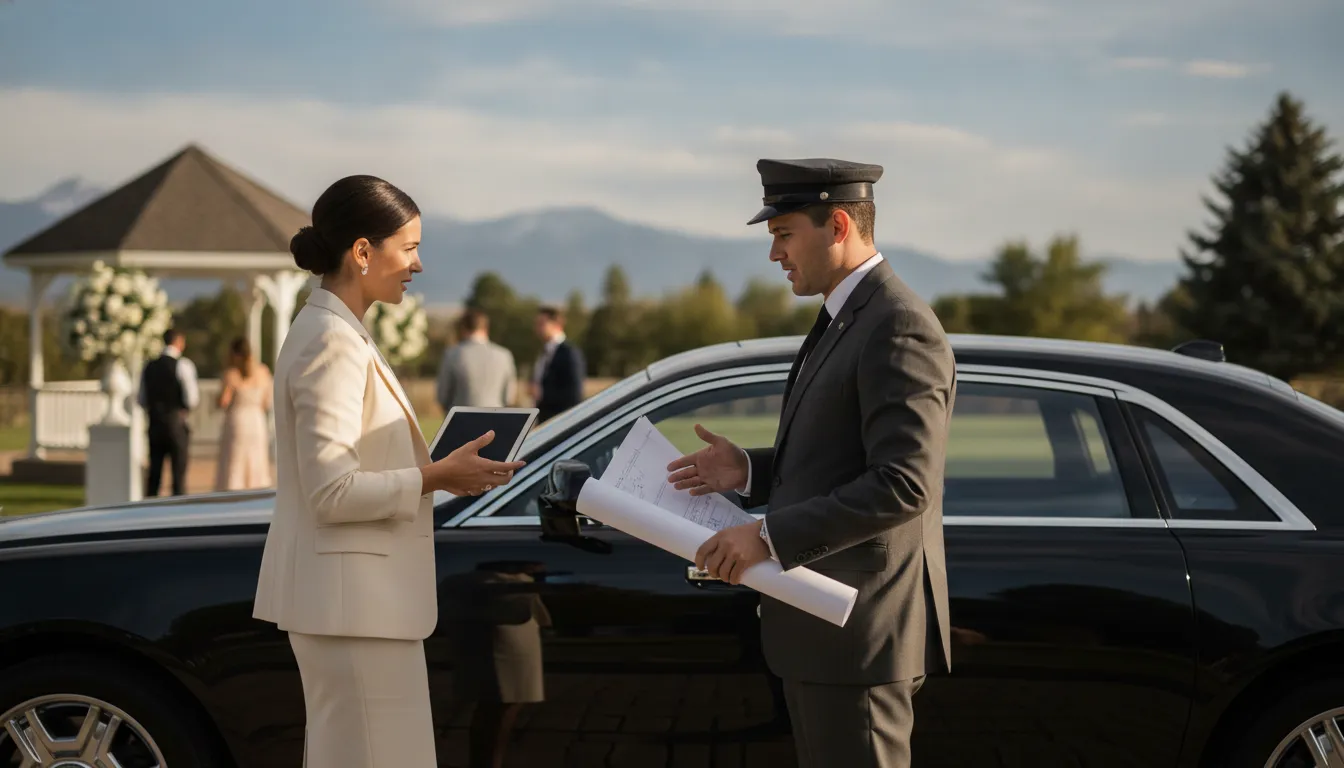
Work backward from the reception arrival time. If the reception has a scheduled entrance, tell the transportation provider that the arrival is time-sensitive. Include the reception entrance, valet instructions, and any preferred location for the couple to exit the vehicle. A venue may have separate guest and service entrances, and the right choice can affect both timing and the guest experience.
When ceremony, photo, and reception locations are in different parts of the metro area, ask the chauffeur or reservation team to review the entire sequence. A route that looks short on a map may involve downtown traffic, a difficult venue approach, a mountain road, or a change in loading instructions.
Reception departure and getaway
The couple’s final departure should be treated as its own movement. Set the intended exit window, destination, and any overnight bags or gifts that need to travel. If the photographer plans a grand-exit sequence, ask the coordinator where the vehicle will wait and how the couple will reach it after the last photo.
Do not automatically tie the getaway vehicle to the final guest shuttle. Guests may leave in waves while the couple stays for photos, family goodbyes, or venue closeout. Separate vehicle roles make it easier to release one vehicle while keeping the couple’s ride available for the actual exit.
How Much Buffer Time Should a Denver Wedding Plan Include?
There is no universal buffer that guarantees an on-time wedding arrival. The right amount depends on the route, venue access, traffic conditions, weather, passenger count, photo schedule, and whether a vehicle must wait between movements. The useful question is not “How long is the drive?” It is “What must happen before the group is actually ready to leave and arrive?”
Review these sources of delay with the transportation provider:
- Boarding: a large wedding party takes longer to gather and enter than a couple traveling with one small bag.
- Venue access: a valet queue, one-way driveway, private road, or loading restriction can add time even when the map distance is short.
- Photos: the planned end of a photo session is not always the moment everyone is at the vehicle.
- Denver traffic: downtown events, sports traffic, construction, and peak travel periods can change the practical route.
- Mountain or foothill travel: winding roads, elevation changes, weather, and limited staging areas require a more conservative plan.
- Personal items: dresses, flowers, gifts, luggage, and decor need a clear loading plan so they do not become a last-minute search.
A strong timeline uses a planned ready time, a hard arrival time, and a named person responsible for releasing the group. It also gives the chauffeur a day-of contact rather than requiring the driver to search for the couple or ask several guests for instructions.
Match the Vehicle to Each Wedding-Day Movement
Passenger count is only the first vehicle-selection question. The right wedding car with chauffeur also needs to fit the movement, the clothing, the luggage, the venue access, and the desired experience. Avi Limo’s published fleet page lists multiple vehicle sizes, but exact availability should be confirmed for the wedding date.
| Wedding movement | Planning question | Fleet direction to discuss |
|---|---|---|
| Couple or small VIP transfer | Do the couple need privacy, dress room, or space for personal items? | Discuss a luxury SUV or smaller limousine option, such as the 6-passenger Cadillac Escalade ESV, based on availability. |
| Couple plus close family | Will parents, attendants, flowers, or bags ride together? | Compare a 10-passenger stretch option with an SUV, considering the actual passenger and item list. |
| Wedding party | Will everyone board and arrive together, or are there separate photo movements? | Review 10-passenger stretch limousines or larger H2 Hummer options for the group size. |
| Guest or family shuttle | How many guests travel in each wave, and where will the vehicle stage? | Discuss the 11-passenger Ford Transit or a larger vehicle plan when the group and route require it. |
| Reception getaway | Does the couple have a dress, gifts, luggage, or a separate hotel destination? | Choose a vehicle around the couple’s comfort, storage needs, and exit timing rather than using the last available group vehicle. |
Avi Limo’s published fleet includes 10-passenger Chrysler 300, Lincoln Town Car, and Dodge Challenger stretch limousines, as well as 18-, 20-, and 24-passenger H2 Hummer stretch options. The fleet page also lists a 6-passenger Cadillac Escalade and an 11-passenger Ford Transit. Treat those numbers as listed passenger capacities, not a substitute for discussing dress volume, luggage, accessibility, and the actual configuration available on your date.
Review Avi Limo’s vehicle options before choosing the vehicle for each movement.
Give the Chauffeur a Complete Route Brief
A chauffeur can drive the route, but the couple, planner, and venue team still need to define what successful coordination looks like. Send one consolidated route brief instead of scattered updates from several family members.
Include the following details:
- Wedding date, service window, and the person authorized to make day-of transportation decisions.
- Every pickup and drop-off address, including hotel names, venue names, and photo locations.
- Preferred entrances, valet instructions, loading zones, gates, parking directions, and backup staging points.
- Passenger names or group descriptions, such as couple, parents, bridesmaids, groomsmen, or hotel guests.
- Passenger count for each movement, including children, attendants, and anyone with mobility or seating needs.
- Dress, garment, flower, gift, luggage, or decor considerations.
- Photo stops, planned waiting periods, and whether the vehicle should wait, cycle, or release.
- Planner, venue, photographer, and emergency day-of contact information as appropriate.
Avi Limo’s wedding service page specifically asks couples to share ceremony and reception locations, scheduled departure time, planned photo stops, passenger count, and preferred vehicle when requesting availability. Its wedding transportation service also emphasizes a professional chauffeur for the route and scheduled stops. That information gives the reservation team a practical starting point for discussing the wedding-day plan.
Plan for Denver Venue and Route Conditions
Downtown Denver hotels and venues
Downtown pickups can involve valet lanes, one-way streets, active curbs, garage entrances, and pedestrians moving between hotels and venues. Confirm where the vehicle should wait and where the couple should meet the chauffeur. If a large vehicle is involved, ask the venue or hotel whether there are turning, height, or staging constraints.
Estate, garden, and suburban venues
Private estates and garden venues may have gates, narrow drives, gravel approaches, or limited space for several vehicles. Give the chauffeur the venue’s preferred entrance and the planner’s arrival instructions. If the vehicle cannot remain at the ceremony site during photos, clarify where it should relocate and when it should return.
Foothill and mountain weddings
Mountain and foothill routes deserve their own review. Winding roads, weather, elevation, limited shoulders, and longer distances can change the practical timeline. Avi Limo’s wedding service page recommends asking about AWD vehicles for mountain locations and building in additional travel time. Discuss the road conditions, vehicle availability, weather plan, and route with the provider rather than assuming a standard metro itinerary applies.
Questions to Ask Before Booking a Wedding Car With Chauffeur
Use the following checklist when you compare wedding transportation options:
- Is the exact vehicle or vehicle class available for our date and service window?
- What passenger capacity applies to the vehicle configuration we are considering?
- Where should the vehicle stage at each hotel, venue, and photo location?
- Should the vehicle wait between stops, return later, or release after a movement?
- How should we plan for extra time if the photo schedule or reception departure changes?
- What details do you need for the route, passenger groups, venue entrances, and day-of contact?
- Which wedding touches are included or available for our booking, such as champagne, red carpet service, or a Just Married bow?
- For a mountain venue, which vehicle options and route considerations should we discuss?
- How are current pricing, additional service time, and vehicle availability confirmed?
Avi Limo states that additional time is charged at the vehicle’s hourly rate and recommends discussing the route and preferred vehicle when requesting availability. Ask for the current quote and service details for your date rather than relying on a generic online estimate.
Wedding Transportation Day-Of Checklist
In the week before the wedding, review the transportation plan with the person managing the day. The goal is not to redesign the itinerary. It is to make sure every person who directs a vehicle is working from the same information.
- Confirm the pickup addresses, venue entrances, and staging instructions.
- Confirm the passenger count for every movement, not just the total wedding-party count.
- Give the planner or day-of contact the transportation provider’s contact information.
- Share the final photo-stop order and the expected handoff from ceremony to photos to reception.
- Identify who will signal that the couple or group is ready to depart.
- Keep personal bags, gifts, flowers, and garment items assigned to a specific vehicle.
- Review the weather and any mountain-route considerations with the provider.
- Make sure the couple’s getaway vehicle has a separate departure plan from guest transportation.
For a broader overview of how to compare wedding transportation and plan a vehicle group, see Avi Limo’s Denver wedding fleet-planning guide. This article focuses specifically on the chauffeur-led run of show, vehicle roles, access points, and handoffs that make the fleet plan usable on the wedding day.
Share your Denver wedding itinerary with Avi Limo and request current vehicle availability.
Wedding Car With Chauffeur FAQs
What does a wedding car with chauffeur do beyond the drive?
The chauffeur supports the planned movements by arriving at the agreed pickup point, following the route, coordinating scheduled stops, and helping keep the transportation sequence organized. The couple and planner should still provide accurate addresses, passenger groups, venue instructions, and a day-of contact.
How early should we plan wedding transportation in Denver?
Start when the wedding date, primary venues, and basic passenger groups are known. Peak dates and multi-venue itineraries benefit from earlier planning because preferred vehicles and service windows may be limited. Share a preliminary itinerary first, then update the details as the photographer, planner, and venues finalize their schedules.
Which vehicle is best for a Denver wedding?
There is no single best vehicle for every wedding. Choose based on the passenger group, dress and luggage needs, venue access, photo plan, route, and desired experience. A smaller luxury SUV may fit the couple, while a stretch limousine or larger vehicle may suit a wedding party. Confirm current availability and the exact configuration before booking.
Should the chauffeur wait during wedding photos?
That depends on the route, the planned photo stops, and the service format. Tell the transportation provider how long the photos may take and whether the vehicle needs to remain available. If the vehicle can release and return later, document the return location and timing so the couple and chauffeur have the same plan.
What information should we provide for a wedding transportation quote?
Provide the wedding date, service window, pickup and drop-off addresses, ceremony and reception times, photo stops, passenger count for each movement, preferred vehicle, venue access information, and a day-of contact. This lets the provider discuss a route and vehicle option based on the actual wedding rather than a generic assumption.
Plan the Ride So the Day Feels Easier
The best wedding transportation plan is specific without being fragile. It names each movement, assigns the right vehicle, gives the chauffeur clear access and contact instructions, and leaves room for the moments that cannot be rushed. For Denver weddings, that may mean planning around downtown loading zones, suburban venue access, photo stops, mountain roads, or a separate getaway departure.
When you are ready, review the Denver limousine services, compare the available vehicle options, and use Avi Limo’s contact page to request current availability and pricing for your date.