Call us: 303-455-4455
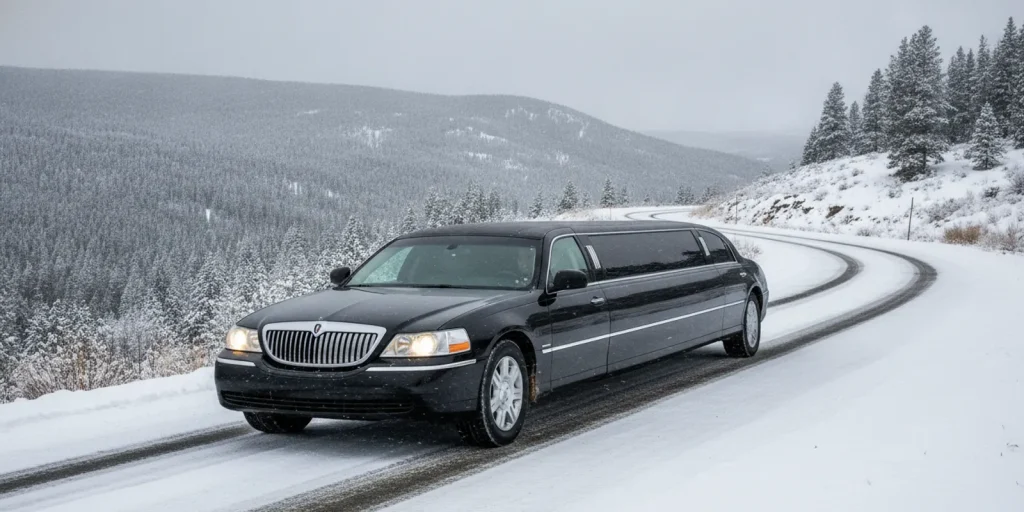
Denver limo winter weather transportation takes more planning than choosing a pickup time. Snow, wind, traffic and changing road conditions can affect local rides as well as mountain travel. Before booking, ask how the route will be monitored, what timing margin makes sense, whether the vehicle fits your group and luggage, and how updates will reach you. This guide focuses on preparation and decision-making; no provider can guarantee road access or an exact arrival time in severe conditions.
Discuss your winter trip with Avi Limo.
What should you ask about route monitoring?
Start by describing the trip clearly. Provide the pickup and destination addresses, preferred departure window, required arrival time and any intermediate stops. For mountain travel, name the resort, lodging address or meeting point rather than only the town. Mention a steep approach, a narrow access road or a venue with a specific loading location.
Ask how current road and weather information is checked, who will contact you if conditions change, and when the provider expects to make a go, delay or revise decision. Colorado’s official winter-driving resource advises travelers to stay informed about conditions and forecasts and identifies 511 as a source of current road and weather information. See the Colorado Department of Transportation winter driving information.
- Which route is expected, and when might an alternate be considered?
- How would a closure, chain restriction or severe forecast affect the trip?
- Who is the day-of contact, and how will that person share updates?
- When should passengers expect a status check?
- What choices are available if the original destination becomes inaccessible?
Do not assume a carrier can override a closure or use a restricted route. A sound plan may require a revised departure time, an alternate meeting point or a different arrangement. Discuss those possibilities before the travel day, when there is time to make a considered decision.
How much pickup buffer should you plan?
Build flexibility into the itinerary instead of treating a normal-weather drive estimate as a promise. Include the time needed for passengers to reach the pickup point, load bags, travel through traffic and reach the actual entrance or loading zone. Then consider what happens after arrival: parking, walking to a venue, checking in or meeting a group. A short Denver-area ride and a long mountain transfer need different margins.
State the required arrival time, not just the time you hope to leave. That distinction lets the provider consider the whole schedule and explain what information is still needed. For a flight, meeting, ceremony, concert or game, make clear whether arrival means reaching the property, terminal curb or a specific entrance. Do not plan the latest possible departure that could work only in ideal conditions.
- Write down the fixed deadline and the location where you must be.
- List each passenger pickup and stop in sequence.
- Allow time for loading, coats, mobility needs and bulky equipment.
- Ask what timing changes are possible if the forecast worsens.
- Choose one reachable trip contact who can relay updates to everyone.
For example, a group leaving from several homes may need more loading and coordination time than a group meeting at one address. If the vehicle must wait while everyone gathers, ask whether waiting changes the quoted service terms. If a venue has a congested arrival window, ask where the vehicle can legally stop and whether passengers need to walk from a designated point. These details are more useful than adding an arbitrary number of minutes without understanding the itinerary.
Think in terms of a schedule with separate components: passenger readiness, loading, travel, arrival access and the time required to move from the vehicle to the final destination. If three people need separate pickups, the ride includes more coordination than a single-address departure even when the map distance is similar. Ask the provider to review the sequence rather than estimating each leg independently and assuming that every stop will be quick.
For a time-sensitive trip, identify which part can move and which cannot. A dinner reservation may allow the group to leave earlier; a ceremony start or a scheduled appointment may not. If the required arrival time is fixed, make that clear at the first inquiry. If the whole outing is flexible, say so too. Knowing the priority helps the provider discuss a realistic plan without presenting a time estimate as a guarantee.

What changes when your trip goes into the mountains?
Mountain travel makes route and destination details especially important. Provide the exact lodging address or drop-off point, desired arrival window, planned return time and any stops. Ask whether the provider can accommodate the route and what weather or road conditions could affect availability. Confirm whether the requested trip is one-way, round-trip or hourly, and make sure the written quote reflects the arrangement you actually need.
Conditions can change between the time you request a quote and travel day. Check official road information near departure and follow posted restrictions. Do not assume a pass, resort approach or secondary road will remain open because it was open when you booked. The Colorado Department of Transportation’s winter travel guidance is a useful starting point for checking conditions and forecasts.
Separate the transportation plan from the destination plan. Confirm where a vehicle can safely and legally drop passengers, whether the property has an appropriate access point and who will meet the group if the final approach is limited. If the requested address becomes unreachable, agree on how the company will communicate and whether an alternate pickup or drop-off point is practical. Avoid assuming a driver can continue past a closure or into a location that cannot be reached safely.
Think through the return leg too. A day trip may begin in clear weather and end after conditions change. Share the return time and pickup location, identify a contact who can be reached, and ask whether timing is fixed or flexible. If the group expects to change plans during an event or resort visit, establish how to request and confirm that change rather than relying on an informal assumption.
A useful mountain-trip discussion also distinguishes the highway portion from the final approach. Ask whether your address is reached by a maintained road, a private drive or a property access road, and whether there are instructions for winter arrival. A lodging address may not identify the precise place where a vehicle can stop. If the destination uses a shared entrance or designated passenger area, include that in the itinerary so everyone understands where the ride ends.
Build a contingency that does not depend on improvising in poor conditions. For instance, identify a public, accessible meeting point only if it is actually suitable and the provider agrees to it. Determine who will contact lodging or the event host if the drop-off must change. If a closure makes the trip impossible, clarify how the company will communicate and what reservation terms apply. Do not make a backup plan that asks a driver to disregard official restrictions or continue into unsafe access conditions.
Which vehicle may fit passengers and winter luggage?
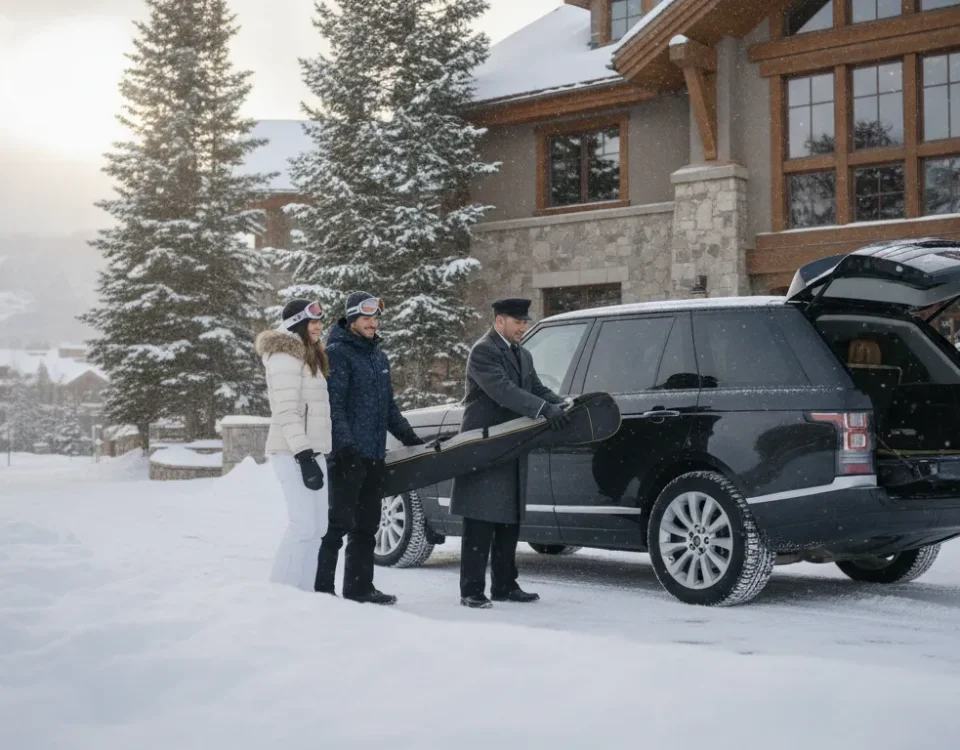
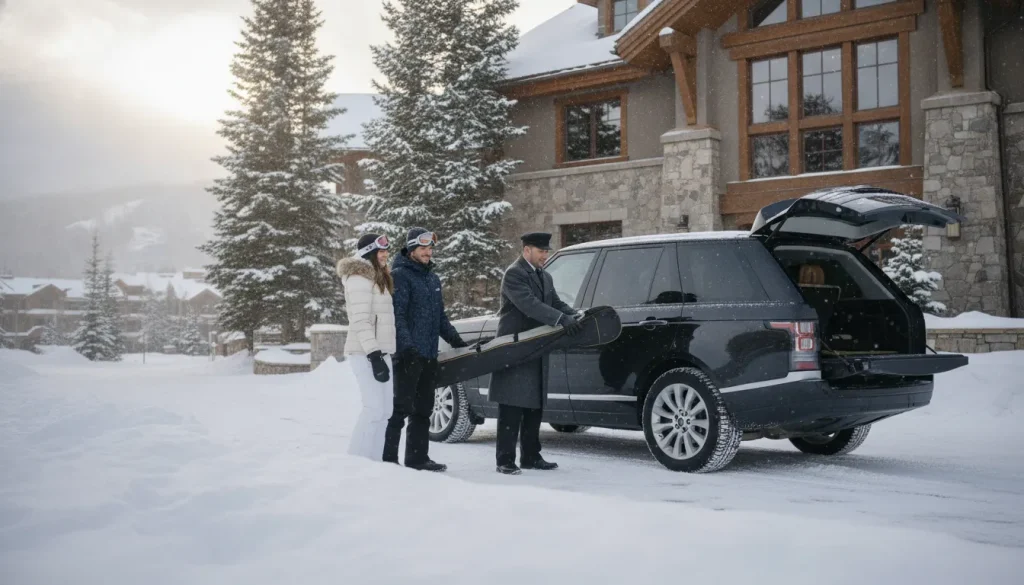
Passenger capacity is only one part of vehicle fit. Winter coats, suitcases, ski equipment and personal items take space, and passengers need room to sit comfortably. Share an accurate passenger count and a realistic inventory of bags, including oversized or awkward items. Ask which configuration can accommodate both the people and their belongings for the specific trip.
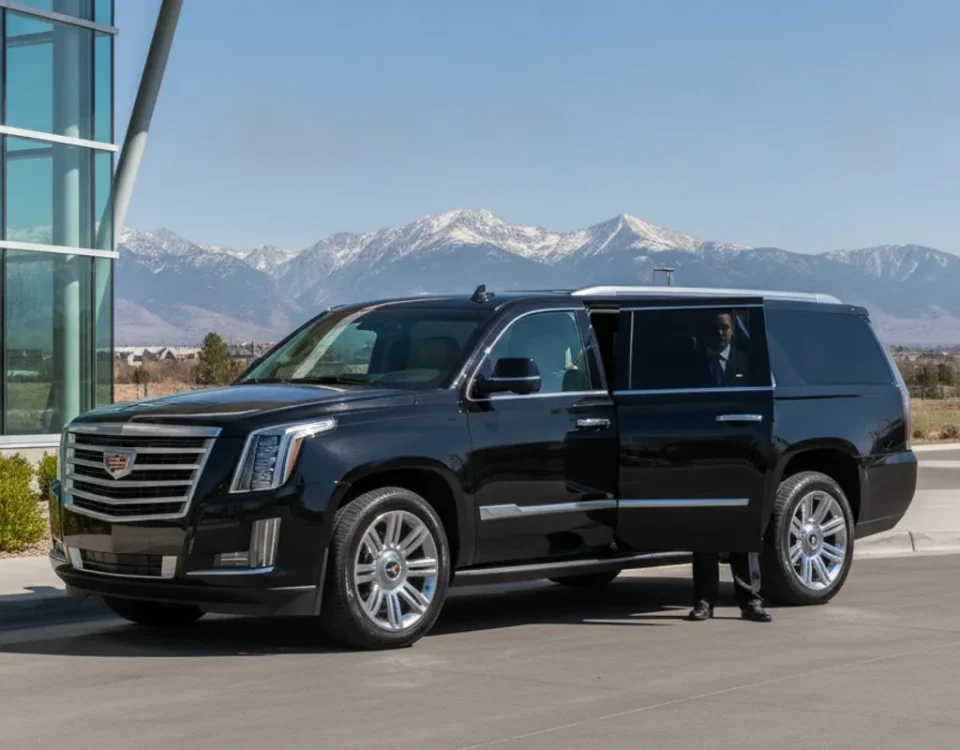
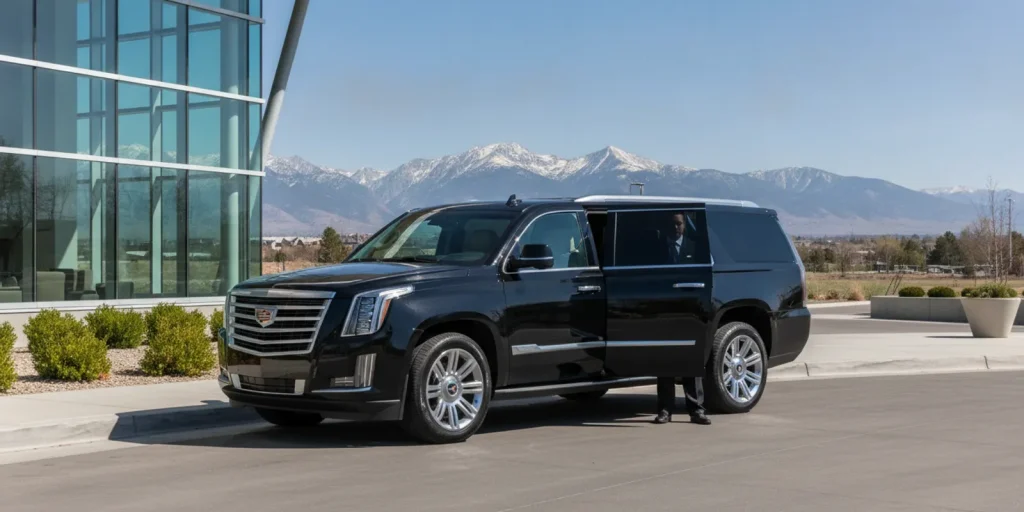
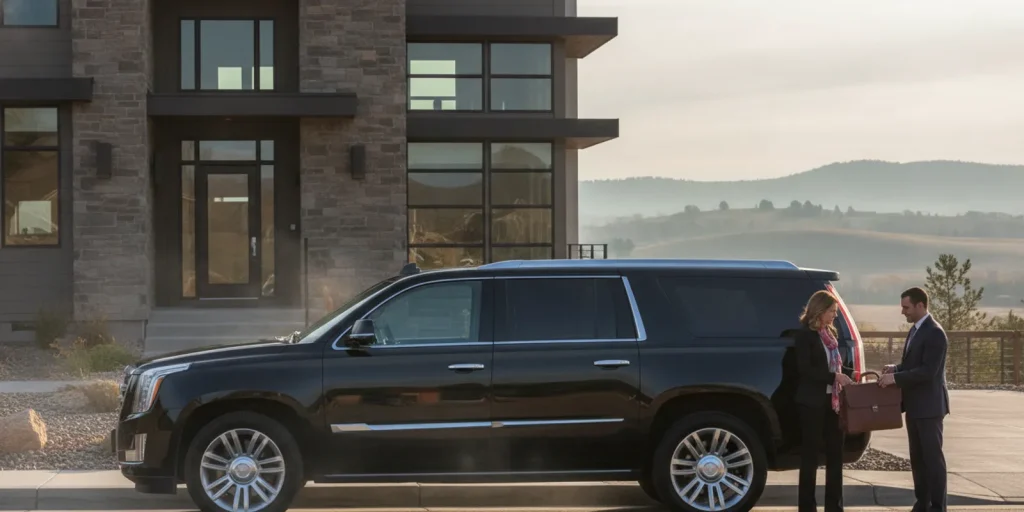
Avi Limo lists options such as a Cadillac Escalade ESV with capacity for six passengers, a Ford Transit with capacity for eleven and H2 Hummers with capacities ranging from eighteen to twenty-four. Confirm current availability and usable luggage space for your date. A vehicle’s listed seating capacity does not by itself establish that it can carry every passenger and all equipment comfortably.
| Trip situation | Details to share | Questions to confirm |
|---|---|---|
| Denver-area pickup | Addresses, passenger count and deadline | Pickup margin, route changes and contact plan |
| Airport or event | Required arrival point, luggage and stops | Loading access, schedule flexibility and terms |
| Mountain destination | Exact address, gear and return plan | Route serviceability, access limits and backup plan |
| Large group | Final headcount and item count | Seating, cargo room and vehicle availability |
Compare quotes by what they include rather than by vehicle name alone. Look at seating, luggage capacity, trip format, waiting expectations and written service terms. Review Avi Limo vehicle information and its service options as you prepare questions. If the group size changes, share the update before travel day; a different count can change which configuration makes sense.
Make the luggage inventory concrete. Instead of saying “some bags,” count standard suitcases, carry-ons, ski or snowboard pieces, garment bags and any equipment that cannot be folded or stacked. Mention whether passengers will bring bulky coats into the cabin. When uncertain, ask whether the specific vehicle configuration has adequate space; do not infer cargo capacity from the passenger number or exterior appearance.
Groups also need to consider how people board and where items go. A vehicle that fits the headcount may still be inconvenient if bags block access or if a passenger has mobility needs. Share those needs early, and ask about the practical loading arrangement. If the count changes from six to seven, for example, revisit the vehicle selection rather than assuming one extra seat or a tighter luggage arrangement will work.
What should you ask about driver and vehicle preparation?
Ask specific questions instead of relying on broad assurances. You might ask how the company assesses weather and road information, how a decision to delay or revise a trip is communicated, and whether the requested vehicle is suitable for the planned load and route. Confirm that the vehicle you are discussing is available for the date, and ask what the provider can and cannot accommodate if conditions deteriorate.
The National Highway Traffic Safety Administration provides general winter-driving preparation guidance for drivers and vehicles, including tires and batteries. Its winter weather driving tips are general reference material, not proof that a specific vehicle or route is appropriate for every storm. The service provider must assess the trip under prevailing conditions.
Before confirming, request clear answers on:
- Whether the planned route and trip type are currently serviceable.
- What happens if conditions worsen before pickup or during the trip.
- Whether a schedule change, waiting time or alternate destination affects the quote.
- How passengers can contact the provider if plans change on the day.
- Which details the provider needs to assess vehicle fit and route access.
Listen for precise limits, not just reassuring language. A useful answer identifies who makes a decision, how it will be shared and what options the passenger has. If something important remains unclear—such as a restricted road, a fixed arrival deadline or the fit of ski equipment—resolve it before treating the reservation as settled.
For vehicle preparation, keep the conversation factual and specific. Ask what information the provider needs about the route, passenger load and equipment, and whether that changes the vehicle or timing recommendation. Avoid treating a general statement about winter readiness as a promise that a trip can proceed in all weather. The appropriate choice can depend on current restrictions, road conditions, the destination approach and the provider’s assessment on the day.
How can you make pickup and communication straightforward?
Snowbanks, poor visibility and event crowds can make a familiar pickup point harder to use. Provide a precise street address and a useful landmark, then confirm where passengers should wait. At a venue, ask whether the normal entrance or loading zone is accessible to the vehicle. If there is a backup meeting point, write it down and share it with every passenger.
Keep the communication chain simple. Identify the person responsible for trip updates and make sure that person can reach the passengers. Send changes to the headcount, luggage, pickup point or arrival deadline as soon as they are known. When several people are traveling from different places, agree on a meeting time and confirm everyone is present before the vehicle arrives. This reduces last-minute calls and protects the schedule margin.
For a quote, Avi Limo’s Denver limo quote information can help organize trip details. You can also review published rate information, then ask about the exact service format and terms for your date. Do not assume a rate page answers every question about a particular route or weather-related change.
For a multi-passenger trip, agree on one channel for updates and one person who will confirm changes with the provider. That person should share the exact new pickup point, arrival requirement or headcount, then verify the reply. Passengers can keep the same final itinerary message on their phones so a change does not get lost in separate conversations. If reception may be limited at the destination, settle the return communication method in advance.
Be precise about where the vehicle can stop. An address may have several entrances, a gated drive, a busy curb or a venue loading zone with restrictions. Ask whether the vehicle should use a particular entrance and where passengers should wait if the curb is blocked. Clear instructions help prevent circling and avoid having people cross a snowy or crowded area while trying to find one another.
What should your winter trip brief include?
Prepare a compact trip brief before contacting a provider. Complete details make it easier to assess route, timing and vehicle fit, and can prevent avoidable back-and-forth. Use this worksheet for a local ride, a group event or a mountain journey:
- Date, preferred pickup time and required arrival time.
- Complete pickup, stop, destination and return addresses.
- Passenger count, luggage count and bulky winter or sports equipment.
- Trip type: one-way, round-trip or hourly arrangement.
- Accessibility or mobility needs and venue loading instructions.
- A primary day-of contact and a backup way to reach the group.
- Fixed schedule needs and flexibility if conditions change.
- Any alternative destination or meeting point the group would consider.
Then organize the conversation in three passes. First, confirm whether the provider can consider the route and requested date. Second, clarify vehicle, passenger and luggage fit. Third, review the written quote, timing assumptions, waiting terms and communication plan. If an answer depends on weather closer to departure, note when that decision will be revisited and who will contact whom.
For any service arrangement, check the written quote and reservation details rather than assuming terms. Avi Limo provides reservation information and a direct contact path for questions. Service minimums and availability can vary, so confirm the terms that apply to your trip instead of assuming a standard duration or rate.
A completed brief might read: “Six passengers, three suitcases and two ski bags; one pickup in Denver; lodging address and return pickup time included; arrival needed before a scheduled dinner; one contact person will receive updates.” That example is intentionally concrete, but it does not decide the vehicle or promise a schedule. The provider can use those details to discuss the practical fit and any unresolved questions.
Before you send the inquiry, scan for omissions: a missing unit number, uncertain headcount, unlisted stop, unclear return time or a vague destination such as only a resort name. Resolve what you can and mark what is still unknown. If you do not yet have a lodging address, say when it will be available and ask whether the quote can be reviewed once the final stop is confirmed.
How can you compare possible winter trip plans?
When the first plan seems uncertain, compare practical choices rather than treating the original itinerary as the only option. One plan might use the requested pickup and destination with a wider time margin. Another could shift the pickup earlier or use a more accessible meeting point. A third might postpone or change the destination if authorities restrict the route. These are planning scenarios to discuss; they are not guarantees that a specific alternative will be available.
Use these questions to assess each scenario:
- Does the revised plan still meet the trip’s main purpose and deadline?
- Can all passengers reach the alternate pickup point safely?
- Will luggage and equipment still fit the requested vehicle?
- Does the option change service duration, stops or quoted terms?
- How much notice is needed to make the change, and who confirms it?
For instance, a group attending a fixed-time event may value an earlier departure and simple drop-off more than a long list of stops. A leisure group going to lodging may have more flexibility to adjust its arrival window, but still needs to know whether the final road is open and where the vehicle can reach. State those priorities to the provider so the discussion focuses on what matters most to your party.
Put the options side by side with the facts that matter to you: schedule flexibility, route uncertainty, number of stops, access conditions, equipment and cancellation or change terms. The comparison does not need to predict the weather. It helps the group decide what it can accept if the original plan becomes impractical. For example, a fixed-time event might call for a simpler itinerary, while an overnight trip may allow more latitude on arrival time but still require a confirmed destination approach.
Do not make a contingency that quietly transfers risk to the driver or passengers. If an alternate destination is not confirmed, it is only an idea, not a settled plan. Ask whether a change is permitted, how it affects the quote and how quickly the provider needs a decision. Write down the agreed fallback and the point at which the group will reassess, rather than making several last-minute requests while conditions worsen.
What should you confirm before travel day?
Use a short check-in process rather than waiting until passengers are standing outside. At booking, verify the itinerary, vehicle request, service format and written terms. Before travel, reconfirm pickup address, passenger and bag count, contact person, route status-check timing and any changes to the arrival requirement. If the provider needs to assess conditions closer to departure, ask when and how you will receive that update.
Keep final details in one message the group can refer to. Include pickup time and location, destination, contact name, passenger count and any agreed backup point. Make sure one person is responsible for reporting changes instead of sending conflicting messages from several passengers. If the plan changes, ask for confirmation rather than assuming a message was received or an adjustment accepted.
Confirm details in a useful order. First, check whether the trip remains serviceable under the current information available to the provider. Next, confirm the pickup instructions and the person who will meet the vehicle. Then review the passenger and luggage count, the destination access point and any return arrangement. Finally, verify the communication method and what the group should do if the agreed plan needs another change.
Keep the tone practical if a forecast becomes more serious. Ask what the provider currently knows, what remains uncertain and when a decision will be revisited. Do not assume silence means the plan is unchanged or that a vehicle will proceed regardless of restrictions. A direct, confirmed update helps passengers make informed choices and gives the group time to adjust its own schedule.
Frequently Asked Questions
Should I book earlier for a winter trip?
Planning ahead gives you time to compare vehicle fit, share the itinerary and ask about service terms. It does not guarantee a particular vehicle or road condition. Confirm availability and the day-of communication plan directly with the provider.
Can a limousine service guarantee an arrival time in a snowstorm?
No transportation provider controls road closures, weather, traffic or emergency restrictions. Share the required arrival time, discuss a sensible buffer and ask how the plan will be updated if conditions change.
What should I share if the ride goes to a ski destination?
Provide the exact destination and lodging address, passenger and luggage counts, bulky equipment details, schedule and return needs. Ask whether the route is serviceable under expected conditions and how an access change would be handled.
How do I choose a vehicle for winter luggage?
Share the total passenger count and a realistic inventory of bags, coats and equipment. Confirm both seating capacity and usable cargo space for the specific vehicle available on your date.
Send your trip details and ask about winter availability.
Plan your Denver winter ride
Before confirming transportation, compare the route, schedule margin, passenger and luggage fit, written terms and day-of communication plan. A clear trip brief helps you ask focused questions and adapt your decisions as Colorado winter conditions develop.