Call us: 303-455-4455
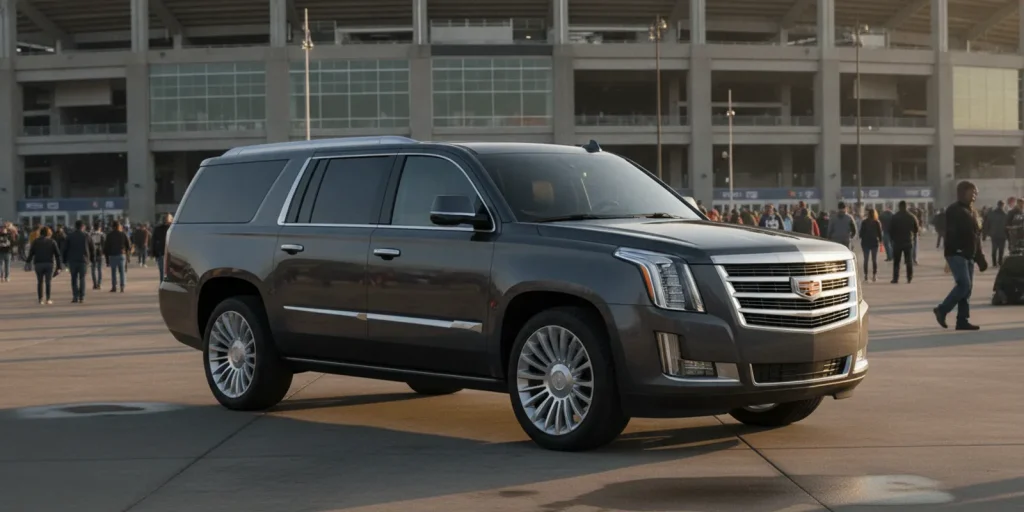
Planning mile high stadium parking starts before event day. For a Broncos game, concert, or another event at Empower Field at Mile High, compare the current event instructions with your group size, arrival time, and return plan. If you would rather leave driving and parking logistics to a chauffeur, arrange the details in advance.
What should you know about Mile High stadium parking?
There is no single parking plan that fits every event. Lot access, availability, entry times, and purchase or reservation requirements can change. Check the venue’s current information for the specific date before you set out. Confirm the lot name and entrance, the time you may arrive, and whether you need to purchase access beforehand. Do not rely on a previous game or concert as proof that the same arrangement will be available this time.
Check surrounding street restrictions as well as stadium lots. Denver’s guidance warns that vehicles parked illegally in the area may be ticketed and could be towed. Review the current Denver event parking restrictions, then obey signs and directions on event day. A familiar street or open curb is not necessarily an authorized place to leave a vehicle.
Make a simple reference note with the event address, the lot or meeting location, and any instructions you need to remember. Keep it accessible to the driver and passengers. If an event update changes the arrival plan, share the new details with everyone before the group is on the road.
What should you confirm about Mile High stadium parking on event day?
Use a short final check rather than relying on a screenshot or message saved weeks earlier. Revisit the venue’s information for your event, make sure the date and lot or arrival instructions match, and check Denver’s current restriction information for nearby streets. If the instructions specify a purchase, reservation, entry time, or lot entrance, keep those details together. Do not assume that a ticket to the event includes a place to park or permission to stop near an entrance.
Next, tell the group what the plan does and does not cover. A parking plan answers where the car may be left, but it does not automatically settle who will drive, where everyone will meet, or how the group will leave. A chauffeur plan needs an agreed pickup and return arrangement; it does not remove the need to follow venue access rules. If any key detail remains uncertain, contact the relevant provider or venue through its current official channel before departing.
- Confirm the event date and the exact approach or entrance.
- Keep parking purchase or reservation details available if applicable.
- Share the driver, vehicle, and meeting plan with the group.
- Recheck any changed instructions and communicate them before travel.
How do you choose a parking or ride plan?
Start with the people and responsibilities involved. Driving yourself can suit a group that has confirmed parking, a designated driver, and enough flexibility to manage the vehicle before and after the event. Chauffeur transportation may suit a group that wants to travel together and have a planned ride home without one attendee taking on the driving. Separate rides can be practical if travelers have different starting points or schedules, but someone still needs to coordinate the meeting and return.
Compare the plans using the same questions, not just the first visible cost or the vehicle name. Who is responsible for finding the car after the event? How will the group reunite if people leave the venue at different times? Does everyone have the same understanding of the return location? These details often determine whether the arrangement feels straightforward once the crowd is moving.
| Plan | What you need to confirm | Best fit when |
|---|---|---|
| Drive and park | Event-specific parking access, lot entrance, walking route, designated driver, and exit plan | Your group is comfortable managing the car and has a confirmed parking plan |
| Chauffeur ride | Passenger count, vehicle fit, pickup point, drop-off direction, return meeting point, and quote terms | Your group wants shared travel and a planned ride home |
| Separate rides | Each pickup and arrival time, shared meeting point, and who coordinates the return | Travelers have different starting locations or schedules |
Avi Limo provides luxury transportation for event travel in the Denver area. Review its transportation services to see the general service options, then ask about the details of your particular trip. The right choice depends on the event, addresses, passenger count, and arrangement that suits your group.
How should you plan arrival time and the route to the entrance?
Work backward from the time you want to be inside, rather than choosing a departure time based only on the drive. Include time for the group to assemble, load belongings, travel toward the stadium, reach a parking or drop-off point, and walk to the right entrance. Follow the event’s arrival guidance and allow flexibility for changing traffic and access around a major event. A schedule that has no margin can turn a small delay into a missed start.
For example, suppose the group wants to be at the entrance 45 minutes before the event begins. That is a planning target, not a prediction about travel time. Add the expected drive from your actual starting point, a buffer you consider appropriate for event-day conditions, time for loading, and the walk from the vehicle. If one person must collect others from multiple addresses, plan that sequence separately. Avoid promising a precise arrival based on a normal non-event drive.
Before leaving, identify the stadium entrance your tickets use and match it to the parking or drop-off plan. A large venue may have several sides and approaches; “near the stadium” is not precise enough for a driver or a group trying to reunite. Make sure passengers understand which entrance or landmark is the reference point, and do not assume the closest curb is available for loading.
- Confirm the event’s arrival instructions and the date-specific lot information.
- Check the full route from the pickup address, not only the final approach.
- Choose a parking entrance or passenger drop-off location that can be described clearly.
- Set a time for the group to be ready, with a named person responsible for checking attendance.
- Share the event address, entrance reference, and any change to the plan with all passengers.
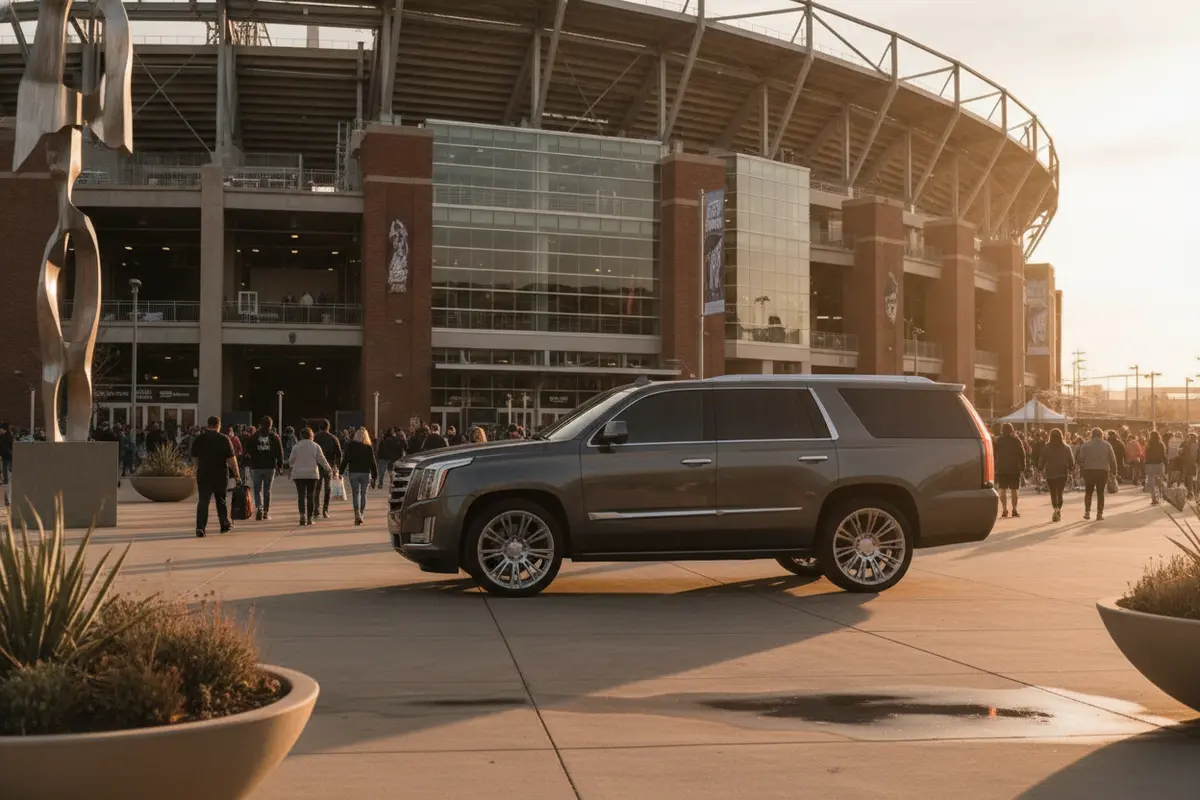
How can you make the pickup and return plan easy to follow?
The return plan deserves as much attention as arrival. At the end of an event, people may leave at different speeds, phone service or messages may be hard to manage in a crowd, and venue staff may direct vehicles away from a location that looked convenient earlier. Decide in advance where the group will meet and how it will confirm that everyone is present. Use a location that passengers can recognize and reach safely, and follow posted rules and event staff directions if conditions change.
For a chauffeur ride, agree on the pickup point with the provider rather than selecting a curb on your own. Confirm what the driver will use as a reference and how passengers should make contact. If the event has designated pickup directions, incorporate those into the plan. Have a fallback meeting point in mind in case the primary area is temporarily inaccessible, but use it only after communicating the change.
For a parked car, record the lot and row or another exact location as soon as you arrive. Take a note or a photo for your own use, and make sure at least one other passenger knows where the car is. Do not depend on one person’s memory after a long event. Agree on whether the group will leave together or whether someone may need to meet the driver later.
- Choose a primary meeting point and tell the whole group before entering the venue.
- Identify one person to send the final “ready” message or confirm attendance.
- Keep the driver’s contact information accessible where relevant.
- Do not wait in a travel lane or restricted area; move to a lawful, safe place and follow staff instructions.
- If the group splits up, communicate a new meeting time and location rather than assuming everyone knows the change.
How should passenger count and belongings shape the vehicle choice?
Count every traveler before requesting a quote, including children. Then think beyond seats: consider coats, bags, mobility needs, and whether the group wants to keep any belongings with it during the event. Do not estimate capacity from a vehicle’s appearance. Ask the provider to confirm the specific vehicle and the passenger capacity applicable to the trip.
Avi Limo lists several vehicle types. Its published capacities include a Cadillac Escalade ESV for six passengers, a Chrysler 300 stretch limousine for ten, a Ford Transit for eleven, and H2 Hummer stretch limousines for 18 to 24. Availability and fit for a particular trip should be confirmed directly. See Avi Limo’s vehicle options and share the final passenger count when you ask about service.
Consider a group of nine friends traveling from two homes. A ten-passenger vehicle may appear to fit by seat count, but the group should still confirm exact availability, passenger needs, pickup sequence, and space for belongings. If the group expands to eleven, do not assume an exception is possible; revisit the vehicle choice before confirming. A group of five with bulky coats or other items should also mention those needs rather than treating every five-person trip as identical.
These examples are prompts for a conversation, not a guarantee of a particular vehicle. The trip’s details, actual availability, and provider confirmation matter. You can also review the company’s service and company information when comparing options.
What should you ask before booking transportation?
Send the provider one clear trip brief. Include the event date, venue, pickup address or addresses, passenger count, preferred arrival time, and return plan. Mention any stops, accessibility considerations, or belongings that affect the fit. If your group has a preferred vehicle type, say so, but ask the provider to confirm the actual available vehicle and its passenger capacity.
Then clarify how the service will work. Ask where the vehicle can drop off and pick up passengers for that event, whether the quoted arrangement includes waiting, and how a schedule or access change will be handled. Request trip-specific confirmation of the quote and applicable terms. Pricing and service minimums can vary; do not infer the amount or service block from an unrelated trip or an old online reference.
For a useful starting checklist, see Avi Limo’s guide to comparing a limo quote. Review the company’s reservation information before confirming, and check the rates page while asking which terms apply to your specific event. These pages can help you frame questions; the provider should confirm the details of your requested trip.
When you are ready to compare a chauffeured option, share the complete trip brief through the Avi Limo contact page. A complete request makes it easier to discuss pickup logistics and vehicle fit together rather than treating them as separate decisions.
How can you compare the total effort of each plan?
Parking and chauffeur service involve different tasks, so compare more than the initial journey. With parking, the driver handles the vehicle before and after the event, but the group must follow the lot’s requirements and return to the car. A chauffeur plan shifts the driving and parking responsibilities to a professional transportation arrangement, while the group still needs to coordinate pickup details and follow agreed instructions. Separate rides reduce the need for everyone to share one schedule, but create more arrival and return points to manage.
Use a short decision worksheet. Write down the confirmed parking information, the time your group needs to arrive, who will drive, how the return works, and any booking or quote details. If a question is unknown, label it “confirm” instead of silently assuming the answer. This keeps estimates separate from facts and helps the group compare plans fairly.
- Access: Is the venue’s current parking or passenger-arrival process clear for your date?
- People: Can the plan accommodate every traveler and any belongings or access needs?
- Responsibility: Who is driving, keeping track of the vehicle, and communicating changes?
- Return: Is there a specific lawful meeting point and a shared understanding of when to leave?
- Terms: If you book a ride, are the vehicle, timing, quote, and relevant policies confirmed?
This comparison can also expose a mismatch early. If the group wants to arrive at different times, a single vehicle may not match the schedule. If everyone will leave together and wants to travel as a group, a shared ride may simplify coordination. If no one wants to manage the car, parking, and return, ask about chauffeur transportation before event day instead of trying to solve those details at the venue.
What does a practical event-day plan look like?
Imagine a group of six traveling from one Denver address to an evening event. First, the organizer checks the event’s current entry and parking information, then confirms that each passenger knows the intended arrival time. The group compares driving with requesting a chauffeur. If it considers a ride, it shares six passengers, the exact pickup address, the preferred time to arrive, any belongings, and the return expectation with the provider. It waits for confirmation of the vehicle and terms before treating the plan as final.
On the day, the organizer confirms the group is ready, checks for event updates, and shares the agreed drop-off or parking reference with passengers. If driving, the driver notes the exact parking location. If using a chauffeur, passengers follow the agreed pickup instructions and do not improvise a stop at a restricted curb. Before the event starts, everyone knows where to meet afterward and whom to contact if the primary plan changes.
Now consider a larger group meeting from several suburbs. Separate pickups may add complexity, and different departure times could affect the choice of service. The organizer can collect each address, count passengers, identify a sensible common departure point if appropriate, and ask the provider whether the proposed pickup sequence and vehicle fit the request. If the arrangement is not confirmed, the group should not assume the schedule will work simply because the map looks straightforward.
In both examples, the useful habit is the same: turn vague intentions into confirmed details. “We will find parking” becomes a named lot and verified entry instruction. “The driver will meet us outside” becomes a specific pickup reference agreed in advance. “There should be enough seats” becomes a confirmed passenger count and vehicle. That precision helps whether the group ultimately drives or arranges a chauffeured ride.
Frequently asked questions
Can I count on the same Mile High stadium parking arrangement for every event?
No. Parking access and event operations may differ by date. Check the venue’s current event information and Denver’s restrictions for the specific day, and follow posted signs and staff directions.
Should I arrange parking before event day?
Follow the instructions for your event. If parking must be purchased or reserved, use the process and timing stated in the venue’s current information. Verify the location, entry details, and any limits before traveling.
Where should a chauffeur meet the group?
Confirm the drop-off and pickup arrangement with the provider for your particular event. Use a clear reference point, and follow venue directions and posted rules. Do not ask a driver to stop in a restricted lane.
What information helps with a ride quote?
Provide the date, pickup address or addresses, passenger count, preferred arrival and return timing, stops, and any vehicle-fit or accessibility needs. Ask the provider to confirm availability, the agreed plan, and the applicable terms.
How can our group avoid getting separated after the event?
Set a primary meeting location and a person responsible for checking that everyone is together. Share the return instructions before entering the venue, keep contact information available, and agree how to communicate if staff or event conditions require a change.
Plan your event transportation.
Make your stadium travel plan before event day
Contact Avi Limo to discuss your event trip.
Whether you drive or arrange a chauffeur, confirm current event restrictions, passenger and vehicle fit, arrival timing, and the return meeting point before the group leaves home.