Call us: 303-455-4455
A wedding shuttle fails long before the first guest misses the ceremony. Hotel pickup times, accurate headcounts, and a clear return plan keep everyone moving without rushed calls or parking confusion.
Request help planning your Denver wedding guest transportation.
Denver wedding guest shuttle transportation works best when one shared schedule covers hotel pickups, venue arrivals, and return trips. Avi Limo recommends confirming riders, accessibility needs, addresses, deadlines, and one on-site contact before matching the group to vehicles and adding buffers for boarding, traffic, and weather.
The central question is not simply which vehicle to book, but how many people need each trip and when they must arrive. Denver wedding guest shuttle transportation starts with the guest list, since every reliable route and pickup window depends on an accurate count. Here’s how.
Denver wedding guest shuttle transportation starts with the guest list
A useful shuttle plan begins with people, places, and times, not a vehicle choice. Turn your RSVP list and hotel block details into a clear picture of who needs a ride and when.
Build a guest movement list
Start by marking each guest’s lodging location, arrival plan, and need for transportation. Group guests by hotel, then note anyone staying elsewhere or driving to the venue. This step shows which pickup points matter and keeps the route focused.
Ask for transportation details with the RSVP or in a short follow-up form. Keep the questions simple so guests can answer without guessing:
- Will you use transportation from the hotel to the ceremony?
- Will you need a ride from the reception back to the hotel?
- Which hotel or lodging area will you use?
- Do you have mobility needs or travel with a child?
Use confirmed responses for the working plan, but leave room for late changes. A shared guest list helps the couple, planner, venue, and transportation team work from the same details.
Turn hotel blocks into pickup groups
A hotel block does not always equal one pickup. Check how many guests have booked at each property and whether nearby lodging can share a meeting point. Then map the pickup order against the ceremony start time and venue access rules.
For example, one group may leave a downtown hotel first, while another leaves a venue-area hotel later. The route should protect arrival time without making the first group wait too long. Review the Colorado travel information before final timing, since road conditions can affect the schedule.
Share each pickup address, meeting spot, departure time, and contact person with guests. Clear details reduce missed rides and last-minute calls. When comparing guest shuttle vehicle options, use the pickup groups rather than the full invitation count.
Keep guest shuttles separate from the couple’s limo
Guest transportation and the couple’s wedding limo serve different schedules. The couple may need private trips for photos, the ceremony, and the reception. Guests usually need timed group trips between lodging and event sites.
Plan these as linked but separate routes. That prevents a change in the photo schedule from delaying a hotel pickup. It also makes the wedding limousine and guest transportation plan easier to review with each venue and hotel before the wedding day.
Build a Denver wedding guest shuttle transportation plan
A hotel-to-venue plan should tell every person where to be, when to arrive, and whom to call if plans change. Build the route around verified details, not estimates, then share one clear version with guests, venues, and chauffeurs.
Final route details
Start with a simple route sheet for each hotel, ceremony site, reception venue, and after-party stop. Confirm each street address, entrance, loading area, and vehicle clearance with the property contact.
Match the guest count and route to the right vehicle before setting departure times. Avi Limo’s guide to guest shuttle vehicle options can help planners compare capacity and event uses.
-
Verify every stop. Record the full address, property contact, loading zone, and safest guest entrance. Ask whether another event or valet team could block the loading area.
-
Count riders by hotel. Request guest responses for both the outbound and return rides. Note children, mobility needs, folding wheelchairs, luggage, and anyone who needs extra boarding time.
-
Check the route timing. Review travel time for the same weekday and departure hour as the wedding. Include the time needed to load, unload, and walk from the drop-off point.
-
Add a practical buffer. Allow room for late guests, elevators, traffic, weather, and venue access delays. Set the final pickup time from the required venue arrival time, then work backward.
-
Create the contact chain. Name one planner or trusted guest as the transport lead. Give the chauffeur and hotel contact that person’s number, plus one backup contact.
-
Plan return waves. Set an early return for guests ready to leave and a final departure after the reception. Assign each vehicle enough time to complete its route before the next wave.
-
Send one final schedule. Share pickup times, loading locations, return waves, contact numbers, and a prompt-arrival reminder. Send updates through one chosen channel so guests do not receive mixed instructions.
Return waves and the contact chain
A planned ride back is more than a convenience. Guests should know their safe ride options before the reception starts.
The transport lead should stay reachable during each loading window and track major changes. If a vehicle is delayed, that person can update the venue, hotel, and waiting guests without sending conflicting messages.
Clear instructions for guests
Send the final plan several days before the wedding, then repeat the key details on the event day. Use landmark-based directions, such as “meet beside the hotel lobby’s east doors,” instead of naming a vague front entrance.
State that each listed time is the vehicle’s departure time, not the time guests should leave their rooms. Ask riders to arrive at the loading area early, and explain whom to contact if they miss their assigned shuttle.
How many shuttle departures does your wedding need?
Most weddings need one arrival departure and two or more return departures. The right plan depends on guest count, vehicle capacity, drive time, and venue access. It also depends on whether guests will leave at one set time or across a wider window.
A single arrival departure
A single hotel departure works when every rider can board one vehicle and the ceremony has a firm start time. It keeps instructions simple and helps the full group arrive together. Build enough time into the schedule for boarding, traffic, and the walk from the drop-off point.
This approach is less forgiving if guests are staying at several hotels or need different pickup times. In that case, separate pickups or arrival waves may reduce confusion. Review Avi Limo’s available vehicle options alongside the pickup plan, since vehicle size shapes the number of runs.
Arrival waves for complex routes
Arrival waves can help when one vehicle must make repeat trips or when several hotel blocks feed the same venue. Each wave needs a clear pickup place and departure time. The last wave should still reach the ceremony before guests need to take their seats.
For Denver and mountain venues, route conditions may also affect the plan. A short route on a map can still include slow loading areas or limited vehicle access. Ask the venue where shuttles may stage, turn around, and wait before setting the schedule.
Return windows after the reception
Return service often works better in waves because guests rarely leave at the same time. An early departure supports older guests, families, and anyone ready to leave after dinner. A final departure serves guests who stay through the last dance.
State each return time on the wedding website and in welcome materials. Guests should know where to wait and whether the shuttle makes more than one hotel stop. Planned rides also reduce the need for guests to drive after drinking.
Before confirming the number of departures, compare the guest list with actual vehicle seats and likely departure groups. Then test the full timeline with the venue and transportation provider. The best plan gives guests clear choices without creating long waits or rushed boarding.
Choose a vehicle around the route and guest experience
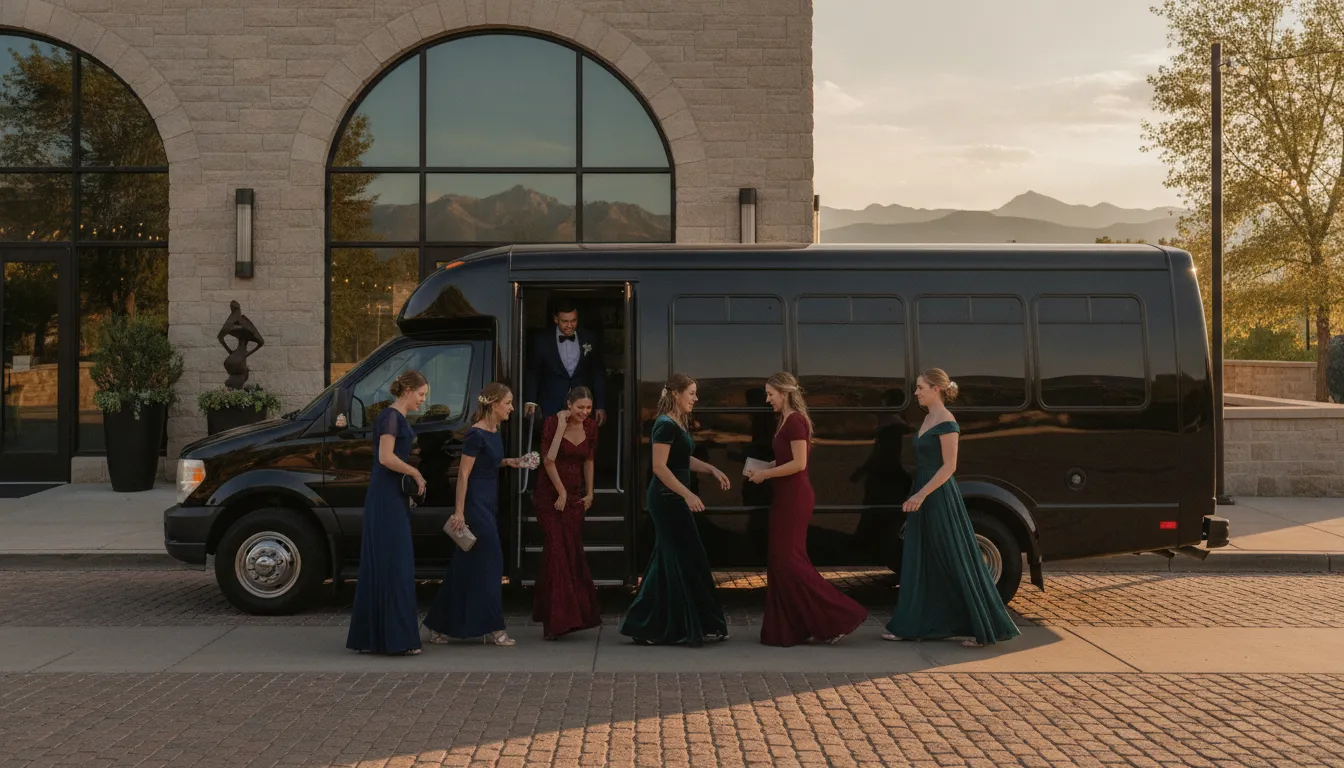
The right vehicle supports the route, schedule, and mood of the day. Start with how guests will move between the hotel and venue. Then confirm which vehicle can handle that plan without making boarding or timing harder.
Match the vehicle to the route
Map each pickup, drop-off, turn, and loading area before choosing a vehicle. Ask the venue and hotel where a chauffeur may wait. Also confirm whether tight streets, steep drives, or limited curb space affect access.
For Denver wedding guest shuttle transportation, compare one larger vehicle with several smaller vehicles. A larger option may simplify the guest list, while smaller vehicles may support staggered pickups. Avi Limo’s shuttle transportation for wedding guests guide can help frame that choice.
Use the following comparison when discussing options.
| Planning point | One larger vehicle | Several smaller vehicles |
|---|---|---|
| Guest movement | Keeps more guests on one schedule | Supports staggered pickup groups |
| Route access | Confirm turns, clearance, and loading space | Confirm each vehicle’s pickup order |
| Boarding | Ask about boarding time and entry steps | Assign guests to a specific vehicle |
| Schedule risk | Build time around one departure | Plan for each vehicle’s arrival |
| Guest experience | Creates one shared trip | Allows smaller, planned groups |
The table summarizes the tradeoffs. Review each point with your transportation provider before choosing a configuration.
Confirm comfort and boarding needs
Think beyond the guest count. Ask about entry height, aisle space, climate control, luggage storage, and room for formal clothing. Confirm any mobility needs with guests early, then share them when discussing vehicle options.
Do not rely on a model name alone. Request the exact vehicle details, current photos, and the setup planned for the trip. Use Avi Limo’s guest shuttle vehicle options comparison to prepare questions, not assume capacity or features.
Plan the ride as part of the event
The trip should feel organized from the first hotel pickup. Decide who will greet guests, check names, and guide each group to the right vehicle. Clear assignments reduce confusion when several people arrive at the curb together.
Also plan the return before the wedding day. Ask whether one departure or a set of return windows fits the venue schedule. Safe transportation matters after alcohol service because impaired driving creates a serious road safety risk.
Finally, confirm the full plan with the transportation provider. Review pickup times, route access, vehicle details, and the guest contact process. Avi Limo’s guide to planning transportation for Denver wedding guests offers more questions for choosing a wedding limousine.
What Denver route details should you confirm?
Traffic and loading plans
Start with each hotel address, venue address, and planned pickup time. Then ask where the vehicle may wait and where guests should gather. A clear loading point keeps the group together and helps the chauffeur avoid circling a busy downtown block.
Build room into the schedule for traffic changes, road work, and slow hotel loading. Share the final timeline with the hotel, venue, planner, and transportation team. This keeps your coordinating wedding guest travel plan aligned when the day becomes busy.
Confirm whether one trip can carry the full group or whether the vehicle must make several runs. For multiple runs, set a departure time for each group. Assign one contact to count guests and tell the chauffeur when everyone is aboard.
Mountain routes and weather
A foothill or mountain venue needs a route review before the wedding day. Confirm the main route, a practical backup, and any narrow entrances or steep drives. Ask the venue which vehicle sizes can reach its passenger loading area.
Weather can change road conditions and guest needs. Check the forecast near the hotel and venue, since conditions may differ along the route. Decide who can approve an earlier departure or route change if conditions affect the schedule.
Keep guests informed without sending too many messages. A short note can cover pickup time, exact meeting point, expected attire needs, and the return plan. Guests should also know whom to contact if they miss their assigned departure.
Venue access and guest comfort
Walk through the final arrival and departure plan with each venue. Confirm gate codes, service-road rules, vehicle height limits, and the safest place for guests to step out. Also identify a nearby waiting area if the main entrance cannot hold a vehicle.
Match the route and group needs to suitable guest shuttle vehicle options. Consider luggage, formal clothing, mobility needs, and room for personal items. Tell the transportation team about guests who may need extra boarding time or a closer drop-off.
Plan the return trips as carefully as the arrivals. Give guests clear departure windows and a visible meeting point. Reliable rides also reduce pressure to drive after drinking.
Questions to ask before booking guest transportation
A clear booking conversation can prevent delays, extra charges, and last-minute vehicle changes. Ask the provider and venue the same practical questions, then compare their answers. Starting with a guide to a reliable guest transportation schedule can help you define your needs before requesting quotes.
Provider ownership and operating plan
First, confirm whether the company owns and maintains the vehicle or acts as a broker. Ask for the exact vehicle model, seated guest capacity, and a current photo. Also ask who will coordinate the chauffeurs and who you can call during the event.
- Will the company named on the contract operate the trip with its own vehicle and chauffeur?
- How will chauffeurs receive the route, hotel contacts, venue rules, and wedding-day schedule?
- What backup vehicle and chauffeur are available if a breakdown, delay, or weather issue occurs?
- Can every rider use a seat belt, and where will bags, gifts, mobility aids, or strollers go?
Ask how the team manages guests who plan to drink and need a safe return ride. A firm final departure plan matters. Confirm that no guest will be left without a planned ride.
Venue access and vehicle fit
A vehicle may fit the guest count but still fail to fit the venue. Ask each venue about loading zones, gates, height limits, turning space, and parking rules. Confirm whether the vehicle may wait onsite or must leave between runs.
- Where will guests board, and is the path easy to use in formal clothes or poor weather?
- Who will open locked gates, reserve curb space, and direct the chauffeur to the correct entrance?
- Does the venue limit vehicle length, idling, noise, arrival times, or repeated shuttle loops?
- How long does one full loop take when loading time and expected traffic are included?
Share the provider’s vehicle details with the venue before signing. Then ask the provider to review the route and loading point. This two-way check can expose access problems while there is still time to choose another vehicle.
Timing, costs, and communication
Request a quote that states the service minimum, overtime rate, wait-time rules, gratuity, and any travel fees. Review likely shuttle transportation costs before comparing offers. A lower hourly rate may not mean a lower final bill when minimums differ.
Ask when the provider needs the final guest count and when vehicle changes stop being possible. Set deadlines for hotel pickup lists, accessibility needs, and guest contact details. Confirm who will send updates if weather, traffic, or the wedding schedule changes.
Before paying a deposit, request a written run sheet with every pickup, departure, and contact number. Ask who can approve extra time on the event day. The final contract should match the route, vehicle, minimum hours, backup plan, and communication process you discussed.
Make the shuttle plan easy for guests to follow
One complete schedule online
Post the full shuttle plan on the wedding website as soon as hotel and venue times are confirmed. Use one page for every pickup, return trip, and backup instruction. Guests should not have to compare several messages to find the correct departure.
For each run, list the hotel name, street address, pickup point, boarding time, departure time, and venue. Make the departure time stand out, then ask guests to arrive 15 minutes early. Avi Limo’s guide to Denver wedding guest shuttle transportation explains the wider planning choices.
Details guests can see
Repeat the same core details in a hotel welcome note and on lobby signs. Place signs near the front desk and the actual boarding door. A simple route label, such as Hotel to Ceremony, helps guests confirm they are in the right place.
Include each item below.
- Pickup point, including the exact door, curb, or valet area
- Boarding time and firm departure time
- Venue name and expected return shuttle times
- Name and mobile number for the day-of transportation contact
- Any mobility, child-seat, or luggage instructions shared before the event
Keep these details together in the wedding website and welcome materials. Guests should not need to search several messages for the plan.
Include a short reminder that guests can use the shuttle for the return trip after the reception. This supports a clear safety plan, especially when alcohol is served, so return instructions should be easy to find.
A day-of boarding routine
Choose one day-of contact who is not the couple, a parent, or someone with ceremony duties. Share that person’s number with the hotel desk, planner, chauffeur, and guests. They can answer questions, locate missing riders, and approve a departure when the group is ready.
Ask the contact to reach the pickup point before boarding begins and check the route sign. A guest list can help with a reserved group, but avoid holding every rider for one late person. Send one final reminder before the first pickup, then keep all updates in the same channel.
When the plan uses more than one vehicle, label each vehicle by route instead of model or color. This avoids confusion if the fleet order changes. Avi Limo’s guide to guest shuttle vehicle options can help match routes with group size before those labels are shared.
Frequently Asked Questions
Are you supposed to provide transportation for wedding guests?
Providing transportation is optional, but it is practical when guests share a hotel, the venue has limited parking, or alcohol will be served. A planned shuttle reduces navigation problems and gives attendees a clear return option. The CDC reports alcohol impairment is a major crash risk among drivers ages 21 to 34, making organized rides a sensible safety measure.
How do you transport wedding guests in Denver?
Start with confirmed hotel and venue addresses, an estimated rider count, and the ceremony arrival deadline. Group guests into timed departures, choose vehicles that fit each group, and add extra time for loading and Denver traffic. Share pickup locations, departure times, and the final return schedule before the wedding. Assign one coordinator to handle late guests and communicate with the chauffeur.
How much does transportation for a wedding usually cost in Denver?
Denver wedding shuttle pricing depends on vehicle size, service duration, travel distance, date, and the number of scheduled runs. Minimum booking periods may apply, so a short transfer can still require a larger service package. Request an itemized quote using the exact hotel, venue, guest count, pickup window, and return plan. Compare total service time and included fees, not only the hourly rate.
Why are wedding shuttle services expensive?
Wedding shuttle service can cost more because the provider reserves both a vehicle and a professional chauffeur for a fixed block of time. Pricing may also reflect vehicle capacity, multiple hotel stops, waiting periods, late-night returns, seasonal demand, and travel outside Denver. Complex schedules require more planning and may need additional vehicles. A simpler route, firm rider count, and consolidated pickup point can help control the total.
Ready to simplify transportation for wedding guests?
Waiting to arrange guest transportation can leave your wedding timeline exposed to late arrivals, missed pickups, and stressful last-minute changes. Starting now gives you time to map hotel pickups, venue arrivals, and return trips around the schedule your guests will follow. A clear plan also helps everyone know where to be, when to board, and how they will get back after the celebration.
Ready to make guest travel one less detail to manage while you focus on the rest of your wedding plans? Request your wedding guest transportation consultation to discuss your schedule, pickup locations, group size, and the vehicle options that fit your event.