Call us: 303-455-4455
Your Breckenridge vacation starts with the drive. Knowing the distance from Denver to Breckenridge, Colorado, is the first step. Check our Breckenridge distance and travel guide for detailed route info. From downtown, you’re looking at about 80 miles, while the trip from Denver International Airport is closer to 102 miles. The typical drive time from Denver to Breckenridge is under two hours, but mountain weather and I-70 traffic can make it unpredictable. Avi Limo provides a stress-free, private luxury car service directly to Breckenridge. For a complete overview, see our ski resort limo guide with experienced mountain drivers and flight tracking. Call 303-455-4455 or book online to reserve your ride.
Winter weather, ski-season traffic, and the Eisenhower Tunnel can stretch this drive to three hours or more. This guide covers the exact distance, realistic drive times, the best route, transportation options, altitude tips, and everything else you need to plan a smooth trip from Denver to Breckenridge.
How Far is Breckenridge from Denver?
The driving distance from downtown Denver to Breckenridge is approximately 80 miles via I-70 West and Highway 9 South. Under normal conditions with light traffic and clear weather, the drive takes about 1 hour and 45 minutes to 2 hours.
Here is a quick reference for the most common starting points:
| Starting Point | Distance | Drive Time (Normal) | Drive Time (Peak/Winter) |
|---|---|---|---|
| Downtown Denver | ~80 miles | 1h 45m – 2h | 2.5h – 3.5h |
| Denver International Airport (DIA) | ~102 miles | 2h – 2h 30m | 3h – 4h+ |
| Colorado Springs | ~150 miles | 2h 45m – 3h | 3.5h – 4.5h |
| Boulder | ~100 miles | 2h – 2h 15m | 2.5h – 3.5h |
The elevation gain is significant. Denver sits at 5,280 feet, while Breckenridge is at 9,600 feet. You will climb nearly 4,300 feet over the course of the drive, passing through the Eisenhower Tunnel at roughly 11,000 feet, the highest point on the Interstate Highway System.
Driving Distance in Miles and Kilometers
The drive from Denver to Breckenridge covers about 80 miles (or 129 kilometers) if you take the standard route along I-70 West and then head south on Highway 9. On a good day, you can expect the trip to take just under two hours. However, anyone familiar with Colorado knows that mountain travel is unpredictable. During the winter or on a busy weekend, that same drive can easily stretch to three hours or more. If you’re starting from Denver International Airport (DIA), you’ll add another 22 miles to your journey, making the total distance around 102 miles (164 kilometers). Instead of wrestling with traffic and potentially slick roads, you can let a professional handle the drive. Booking a private car service from DIA ensures you arrive relaxed and ready to enjoy the mountains.
Flying Distance
While you can’t book a commercial flight directly into Breckenridge, it’s interesting to know the straight-line distance between the two locations. As the crow flies, Denver is only about 59 miles (or 94 kilometers) away from Breckenridge. This measurement shows just how close the two are geographically, without the winding path of the interstate carving through the Rocky Mountains. Of course, since we have to drive around the mountains instead of flying over them, the actual travel distance is longer. This geographical closeness is what makes Breckenridge such an accessible and popular mountain getaway for Denver locals and visitors alike, offering a complete change of scenery just a short drive away.
Your Best Route from Denver to Breckenridge
The standard route from Denver to Breckenridge follows I-70 West through the foothills and into the Rocky Mountains:
- Head west on I-70 from Denver through Idaho Springs and Georgetown
- Pass through the Eisenhower-Johnson Memorial Tunnel beneath the Continental Divide at 11,158 feet
- Take Exit 203 (Frisco/Breckenridge) onto Highway 9 South
- Follow Highway 9 for about 10 miles south into Breckenridge
The scenery along this route is stunning. You will pass through Clear Creek Canyon, see the old mining town of Georgetown, and cross beneath the Continental Divide. After the tunnel, the landscape opens into the Summit County valley with views of the Tenmile Range and surrounding peaks.
Using Travel and Traffic Apps for Real-Time Updates
The drive time on I-70 can be notoriously unpredictable. While it might look like a straightforward two-hour trip on paper, weekend ski traffic, holiday rushes, and unexpected weather can quickly add hours to your journey. Before you head out, it’s a smart move to check real-time road conditions. Apps like Google Maps and Waze are essential tools for this drive, as they provide live updates on accidents, congestion, and road closures. They can help you get a more realistic arrival time and sometimes suggest detours, though alternate routes are limited in the mountains. If you’d rather not spend your trip staring at a map, letting a professional driver handle the logistics is a great alternative. Our chauffeurs are experts on the I-70 mountain corridor and use the latest traffic data to ensure the smoothest ride possible, allowing you to relax and enjoy the scenery.
How to Avoid I-70 Mountain Traffic
I-70 is Colorado’s most congested mountain corridor. The worst traffic typically occurs:
- Friday afternoons (westbound): Denver residents heading to ski resorts create bumper-to-bumper traffic from the I-70/C-470 interchange through the Eisenhower Tunnel
- Sunday afternoons (eastbound): Return traffic from the mountains backs up for miles
- Holiday weekends: Thanksgiving, Christmas, New Year’s, MLK Day, and Presidents’ Day weekends can double or triple drive times
- Powder days: A big snowstorm followed by a clear day brings every skier in the Front Range to I-70
To avoid the worst congestion, leave Denver before 7 AM or after 7 PM on Fridays. For Sunday returns, leave Breckenridge before 10 AM or wait until after 6 PM.
Consider an Alternate Route: Highway 285
When I-70 traffic is at a complete standstill, having a backup plan can save your trip. Highway 285 offers a scenic and often faster alternative when the main interstate is backed up for miles. This route takes you southwest out of Denver on US-285 through towns like Conifer and Bailey before you head north on Highway 9 through Alma and Fairplay, arriving at the south end of Breckenridge. While the route is a bit longer in mileage, the drive through open valleys and historic mining towns can be far more pleasant than sitting in gridlock. If you’d rather not worry about navigating alternate routes or tricky weather, our professional chauffeurs monitor traffic conditions to choose the best path, ensuring you can simply relax and enjoy the ride.
Driving to Breckenridge in the Winter? Here’s What to Know
Winter driving between Denver and Breckenridge demands preparation. Colorado’s Traction Law (Code 15) and Chain Law (Code 16) are enforced on I-70 from September through May when conditions deteriorate.
Traction Law requirements: – All vehicles must have either 4WD/AWD, adequate snow tires (at least 3/16″ tread depth), or chains/approved traction devices – Violations carry a minimum $130 fine – Vehicles blocking the road due to inadequate traction face fines of $656 or more
The stretch between Georgetown and the Eisenhower Tunnel is where conditions are most treacherous. Black ice, sudden whiteouts, and steep grades make this section challenging even for experienced mountain drivers. The Colorado Department of Transportation (CDOT) monitors conditions in real time. Check COTrip.org before departing.
If mountain driving in winter feels daunting, a professional car service eliminates the stress entirely. Avi Limo’s fleet of luxury vehicles is maintained for mountain conditions, and every driver has extensive experience navigating I-70 in all seasons. Call 303-455-4455 for a quote.
When is the Best Time to Drive to Breckenridge?
Driving in Spring, Summer, and Fall
The drive to Breckenridge is at its most predictable during the spring, summer, and fall. When the weather is clear and traffic is light, you can expect the trip from Denver to take about 1 hour and 45 minutes to 2 hours. These seasons offer stunning scenery without the added stress of snow and ice on I-70. However, weekend traffic is still a major factor. To keep your drive under two hours, timing is key. If you’re heading up on a Friday, try to leave Denver before 7 AM or wait until after 7 PM. For the return trip on Sunday, your best bet is to leave Breckenridge before 10 AM or after 6 PM to miss the worst of the eastbound congestion. Of course, if you’d rather not watch the clock, you can always book a private car and let a professional driver handle the logistics.
What to Pack for the Drive
No matter the season, a little preparation goes a long way for the drive into the mountains. The most important thing to remember is the significant change in altitude. You’ll be climbing from Denver’s 5,280 feet to Breckenridge’s 9,600 feet, and that elevation gain can affect how you feel. Be sure to pack plenty of water to stay hydrated and some snacks for the road. It’s also smart to bring layers of clothing; the temperature can drop significantly as you gain elevation, even on a sunny day. Sunglasses are another must-have, as the Colorado sun is intense, especially when reflected off snow. Having these essentials on hand ensures you arrive in Breckenridge feeling comfortable and ready to explore.
How to Get from Denver to Breckenridge Without a Car
You have several ways to get from Denver to Breckenridge. Each has trade-offs in cost, convenience, and comfort.
Private Car or Limo Service
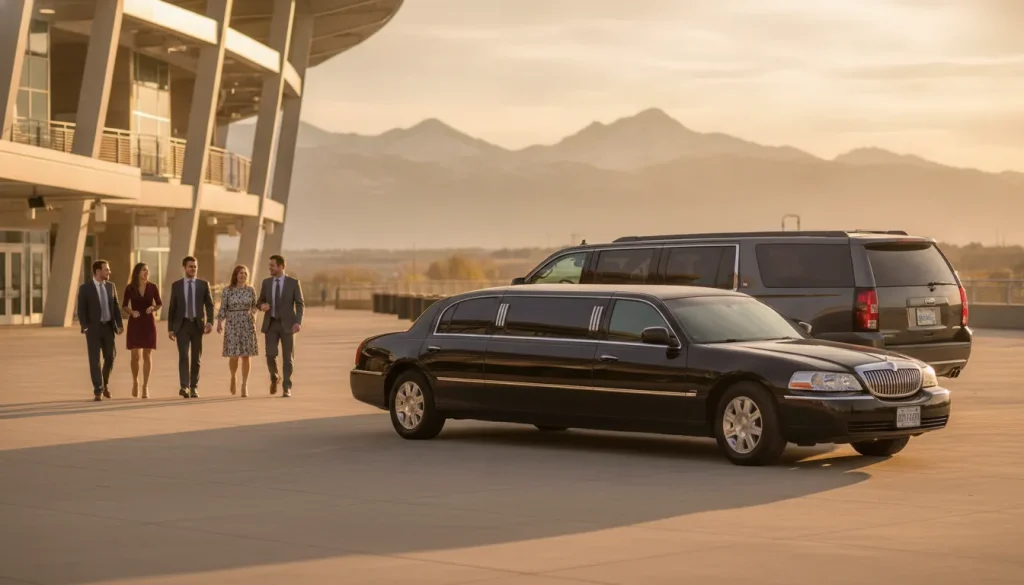
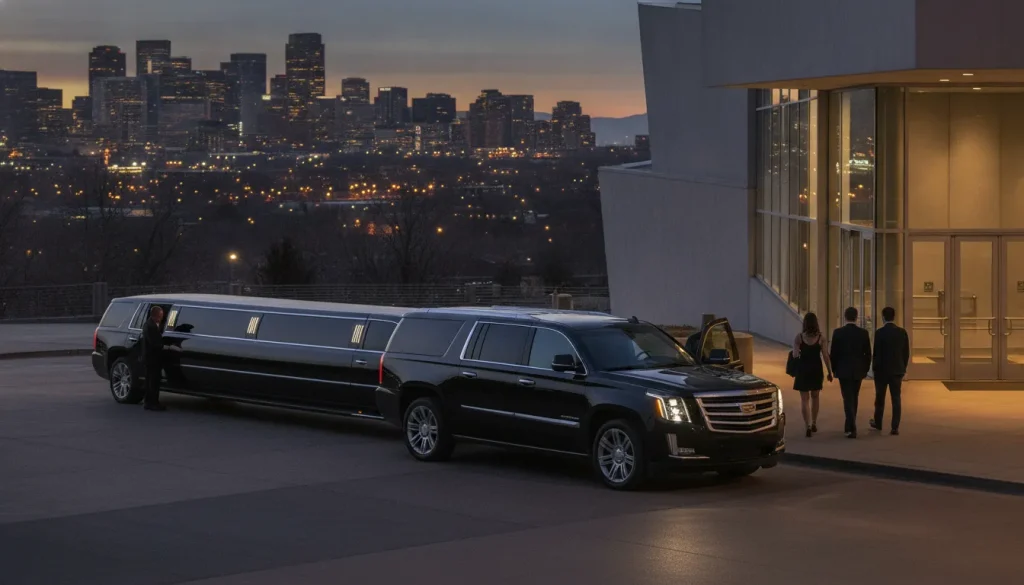
A private car service is the most comfortable and flexible option, especially when you reserve a dedicated Breckenridge limo service for the mountain route. Check our Breckenridge limo pricing guide for current rates. Your driver meets you at your location (or at the airport with flight tracking), handles your luggage and ski gear, and takes you directly to your destination with no stops. This is especially valuable for groups, families with young children, and anyone who wants to avoid mountain driving.
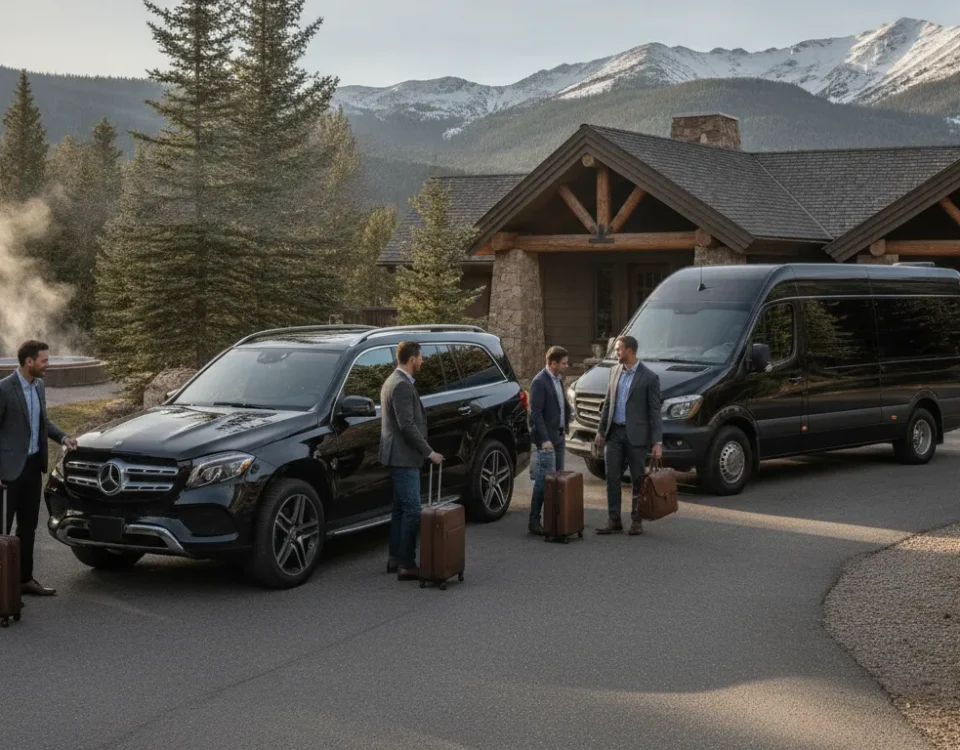
Avi Limo offers airport transfers from DIA as well as point-to-point service from anywhere in the Denver metro area. Vehicle options range from luxury SUVs for small groups to Sprinter vans and stretch limousines for larger parties. Make a reservation or call 303-455-4455.
Shared Shuttle Services
Shared shuttles like Epic Mountain Express run between DIA and Breckenridge on fixed schedules. They cost less per person than private service, but you share the ride with other passengers and may need to wait for pickups and make multiple stops. Expect travel times of 2.5 to 4 hours depending on the number of stops.
Popular Shuttle Options
Companies like Epic Mountain Express are a common choice for travelers heading from DIA to the mountains. They operate on a fixed schedule, picking up multiple groups of passengers along the way. The main advantage is the lower cost per person compared to a private ride, which can be appealing for solo travelers or couples. However, this shared model means your travel time can be significantly longer. You might have to wait for other passengers to arrive at the airport, and the shuttle will make several stops in different mountain towns before reaching your specific destination in Breckenridge. This can easily add an hour or more to your trip.
Common Shuttle Amenities
Most shared shuttles provide the essentials for a comfortable trip, including dedicated space for your luggage and ski gear. Inside, you can usually expect comfortable seating, and some services offer complimentary Wi-Fi, though the connection can be spotty in the mountains. Occasionally, you might find bottled water available. While these amenities cover the basics, they don’t compare to the personalized comfort of a private vehicle. If you prefer more space, privacy, and the ability to stop whenever you like, a dedicated car service offers a much more luxurious and tailored experience with high-end vehicles to choose from.
Rental Car
Renting a car gives you maximum flexibility once you arrive, but you will need a vehicle with 4WD or AWD during winter months to comply with Colorado’s Traction Law. Parking in Breckenridge can also be limited and expensive during ski season.
Bustang (State Bus Service)
Colorado’s Bustang service offers an affordable bus route from Denver’s Union Station to Frisco, where you can connect to the Summit Stage bus for the final leg to Breckenridge. The total trip takes 3 to 4 hours and costs significantly less than other options, though it requires a transfer.
Rideshare (Uber/Lyft)
Rideshare apps work for the Denver-to-Breckenridge trip, but availability can be limited, prices surge during peak times, and many rideshare drivers are not equipped for or experienced with mountain driving in winter.
A Quick Cost Breakdown
| Option | Approx. Cost (One-Way) | Travel Time | Best For |
|---|---|---|---|
| Private car/limo (1-6 passengers) | $250 – $400 | 2 – 2.5 hours | Comfort, groups, airport transfers |
| Shared shuttle | $80 – $100/person | 2.5 – 4 hours | Solo budget travelers |
| Rental car | $60 – $150/day + gas | 2 – 3 hours | Multi-day flexibility |
| Bustang + Summit Stage | $20 – $30 | 3 – 4 hours | Budget conscious |
| Rideshare | $150 – $350+ | 2 – 3 hours | Convenience (limited) |
For groups of four or more, the per-person cost of a private car service is often comparable to shuttle tickets, with a dramatically better experience.
Feeling the Altitude? Tips for Acclimating in Breckenridge
Breckenridge sits at 9,600 feet above sea level, making it one of the highest towns in the United States. If you are arriving from sea level or a low-altitude city, altitude sickness is a real possibility.
Common symptoms include: – Headache – Fatigue and shortness of breath – Nausea and dizziness – Difficulty sleeping
Tips for adjusting: – Hydrate aggressively before, during, and after your trip. The dry mountain air at altitude dehydrates you faster than you expect. – Avoid heavy alcohol consumption for the first 24 hours – Take it easy on your first day; save the black diamond runs for day two – Consider spending a night in Denver at 5,280 feet before heading up to 9,600 feet, which gives your body an intermediate adjustment period
A private car service makes altitude adjustment easier because you can rest comfortably during the ride instead of focusing on driving mountain roads.
Consider Over-the-Counter Aids
Even if you do everything right—drink plenty of water and take it easy—a mild headache can still creep in as your body adjusts to the thin air. For a headache, common over-the-counter pain relievers like ibuprofen or acetaminophen can provide relief. If you’re feeling a bit nauseous, which is another frequent complaint, some people find that ginger chews or an over-the-counter motion sickness medication can help settle their stomach. These simple aids can make a big difference in your first 24 to 48 hours at altitude. Of course, these are just suggestions for managing mild discomfort. If your symptoms feel severe or don’t improve, you should seek medical advice.
The Best Things to Do in Breckenridge
Breckenridge is a year-round destination with activities for every season. Visit our mountain ski shuttle hub for comprehensive resort information:
Winter (December – March): – Skiing and snowboarding at Breckenridge Ski Resort (5 peaks, 2,908 acres) – Cross-country skiing and snowshoeing at the Breckenridge Nordic Center – Ice skating at the Stephen C. West Ice Arena – Historic Main Street shopping and dining
Summer (June – September): – Mountain biking and hiking (hundreds of miles of trails) – Fly fishing on the Blue River – The Breckenridge Arts District and annual festivals – Gold panning at the Country Boy Mine
Year-round: – Main Street restaurants and craft breweries – The Breckenridge Distillery tour – Spa treatments and hot springs nearby – Day trips to Vail, Keystone, Copper Mountain, and Beaver Creek
If you are planning a day trip to nearby resorts, Avi Limo provides private transportation throughout the Colorado mountains, with Denver to Estes Park private car service and resort-to-resort transfers.
Frequently Asked Questions
How far is Breckenridge from Denver? Breckenridge is approximately 80 miles from Denver via I-70 West and Highway 9 South. From Denver International Airport, the distance is about 102 miles.
How long does it take to drive from Denver to Breckenridge? In normal conditions, the drive takes 1 hour and 45 minutes to 2 hours. During peak ski season, holiday weekends, or winter storms, expect 2.5 to 4+ hours.
Do I need a 4WD vehicle to drive to Breckenridge? Colorado’s Traction Law requires 4WD/AWD, adequate snow tires, or chains on I-70 during winter conditions. Between November and April, a 4WD or AWD vehicle is strongly recommended.
What is the best time to drive from Denver to Breckenridge? Leave before 7 AM or after 7 PM on Fridays to avoid westbound traffic. On Sundays, depart before 10 AM or after 6 PM to miss eastbound congestion.
Is there a train from Denver to Breckenridge? There is no direct train service. The closest option is Colorado’s Bustang bus from Denver Union Station to Frisco, then connecting to the free Summit Stage bus to Breckenridge.
How much does a private car service cost from Denver to Breckenridge? Private car service typically ranges from $250 to $400 one-way for a luxury SUV or sedan. Larger vehicles for groups cost more but offer excellent per-person value. Call Avi Limo at 303-455-4455 for an exact quote.
What is the elevation of Breckenridge? Breckenridge sits at 9,600 feet above sea level. The summit of Breckenridge Ski Resort reaches over 12,998 feet.
Ready to Plan Your Breckenridge Trip?
The drive from Denver to Breckenridge is one of Colorado’s most scenic routes, but it demands respect, especially in winter. Whether you choose to drive yourself, take a shuttle, or ride in comfort with a professional car service, planning ahead makes all the difference.
Avi Limo has been providing luxury transportation from Denver to Breckenridge and throughout the Colorado mountains for over 25 years. Our drivers know I-70 and Highway 9 in every season, our vehicles are maintained for mountain conditions, and we track your flight in real time so you never wait at the airport.
Ready to skip the stress and start your mountain vacation the moment you land? Book your reservation or call 303-455-4455.
Key Takeaways
- Plan for a flexible travel schedule: The 80-mile drive from Denver is typically under two hours, but weekend ski traffic and winter weather can easily double that time, so it’s smart to travel during off-peak hours.
- Prioritize a stress-free arrival: A private car service is the most direct and comfortable way to get to Breckenridge, letting you avoid the challenges of winter driving, I-70 congestion, and multiple shuttle stops.
- Prepare for both the journey and the altitude: If you drive yourself in winter, make sure your vehicle meets Colorado’s traction laws. Once you arrive, drink plenty of water to help your body adjust to the 9,600-foot elevation.
Related Articles
- How Far Is Denver to Breckenridge? Your Complete Transportation Guide | Avi Limo
- Luxury Limo Travel from Denver to Breckenridge Explained
- The Ultimate Guide to Breckenridge Limo Service
- Breckenridge Limo Service: The Complete Guide
- Find the Best Black Car Service in Breckenridge | Avi Limo
- Denver to Vail Limo Service: Luxury Ski Resort Transportation Guide | Avi Limo