Call us: 303-455-4455

Asking the right Denver limo booking deposit questions can help you understand what you are agreeing to before reserving transportation. Deposit rules, cancellation terms, and payment schedules vary by company and trip, so ask for the details in writing. This guide focuses on the booking decision: what the payment secures, which vehicle is confirmed, and how the ride plan is documented.
Start with your actual itinerary rather than a generic estimate. A single airport transfer, a wedding schedule with several stops, and an evening event with a late return create different questions. Avi Limo’s Denver reservation information is a useful starting point, but the quote and written terms for your specific trip should control your decision.
What should you ask about a limo deposit?
First clarify what the initial payment does. It may reserve a date, vehicle, or service window under a provider’s policy; do not assume every company uses the same definition or refund terms. Ask the company to explain the payment in plain language before you send it.
- What amount is due to confirm the reservation?
- Does the payment reserve a named vehicle or only a vehicle category?
- Is the deposit credited toward the quoted total?
- When is the balance due, and how will you receive a reminder?
- Which payment methods are accepted, and are any processing charges involved?
- Will the receipt show the trip date, amount paid, remaining balance, and due date?
A useful written breakdown separates the deposit from the total rather than making you calculate it. For example, if the quote lists a total and a deposit, ask the provider to state the exact remaining balance and its due date. Do not infer that taxes, gratuity, parking, or tolls are included unless the document says so. If an item is not applicable, ask to have that clarified as well.
What cancellation and change terms should you clarify?
Before paying, learn how cancellation, date changes, and itinerary adjustments work. A verbal assurance such as “we can work with you” does not tell you the deadline, notice method, or financial consequence. Ask for the actual terms that will apply to your reservation.
- What is the cancellation deadline, and how must notice be sent?
- Is any part of the payment refundable, and under which conditions?
- Can you move the date, and does a date change count as a cancellation?
- What happens if you change a pickup address, passenger count, or destination?
- How are extra stops, waiting, extensions, or a delayed return handled?
- Will a change require a new written quote or confirmation?
Use a concrete scenario to check that you understand the answer. If an event moves by a week, ask whether the booking can be transferred and what happens if the new date is unavailable. If the group adds a stop, ask whether the price or service window changes. These are questions, not assumptions about a provider’s policy. The response should identify the notification channel and any applicable deadlines.
For a wedding or concert, the schedule may be fixed even when the return time is not. For an airport transfer, a flight change may affect the planned pickup. For a mountain trip, route and timing discussions may matter. Explain your likely changes before booking and ask how each is treated rather than relying on a general summary.
What exactly does the quote include?
Compare quotes only after matching the trip details. A lower total may cover fewer hours, a different vehicle type, or a different set of stops. Ask for an itemized or plainly explained quote that lets you compare equivalent arrangements.
| Quote item | Question to ask | What to confirm in writing |
|---|---|---|
| Deposit and balance | How much is due now, and when is the rest due? | Amounts, due dates, and whether payment credits toward total |
| Service time | What are the start, end, and included service hours? | Service window and extra-time terms |
| Vehicle | Is a particular vehicle confirmed or a category? | Vehicle/category, passenger capacity, and cargo fit |
| Trip changes | How are cancellations, added stops, or date changes handled? | Notice process, deadlines, and any applicable charges |
| Pickup | Where and when does the chauffeur meet the group? | Addresses, timing, contact plan, and venue instructions |
| Other charges | Are taxes, gratuity, tolls, or parking separate? | Included items and possible additional charges |
Ask whether the total is a fixed quote for the described itinerary or an estimate subject to changes. If service time is hourly, confirm how the booked period is measured and whether extra time must be approved. If the trip is point-to-point, confirm whether a planned stop or wait is included. Avi Limo’s rates information can provide context, but request confirmation of the terms and total for your own trip.
How do you confirm the right vehicle and passenger fit?
Give an accurate passenger count and describe luggage, mobility needs, or event items that affect space. Seat capacity alone may not answer whether the group’s bags fit comfortably. Ask whether the reservation identifies a specific vehicle or a category, and what will happen if the planned vehicle changes.
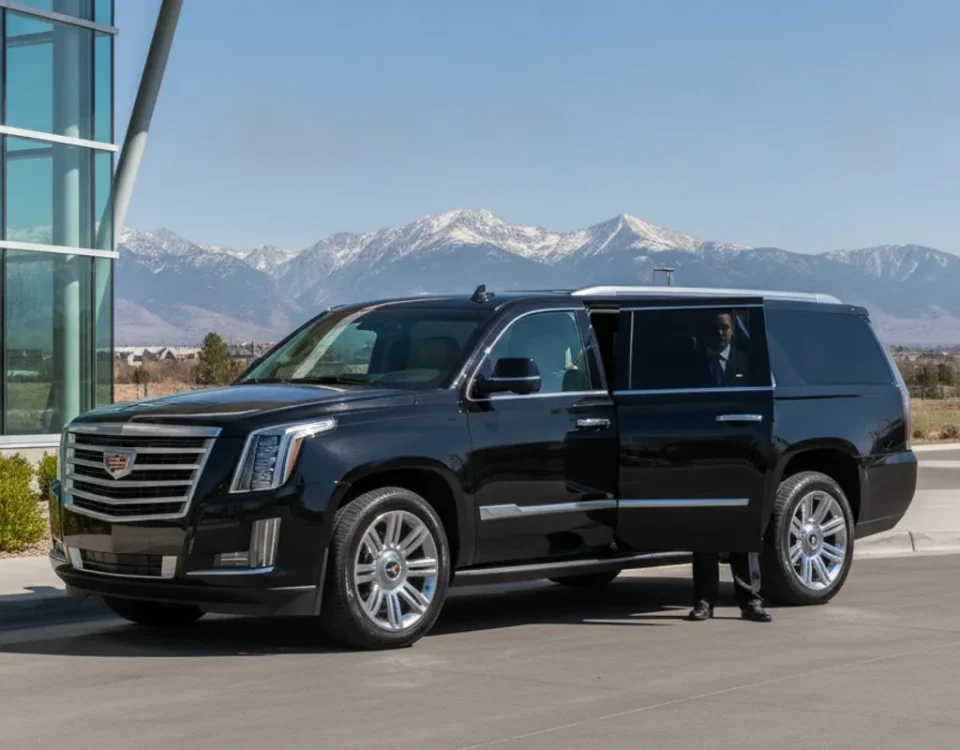
Avi Limo lists options including a Cadillac Escalade ESV for up to six passengers and a Ford Transit for up to eleven; stretch limousine capacities differ by model. Review the current vehicle information and ask the company to confirm fit for your passengers and belongings. The service options can help you compare formats, but the quote should identify what is included in your specific booking.
Think through a practical example: a group of ten with luggage may need a different fit check from ten people attending a local event without bags. Send the count and luggage estimate together. For multiple pickups, say how many people board at each stop and where the vehicle can safely wait. These details help the provider assess the plan before payment.

What chauffeur and service details should be documented?
Confirm the operational details that help everyone follow the same plan. Ask who will be the day-of contact, how the pickup point will be identified, and when to expect any coordination message. Keep the confirmation focused on service needs rather than requesting unnecessary personal information.
- What is the exact pickup address and scheduled time?
- Where should passengers wait, and how will the vehicle or chauffeur be identified?
- What contact method should the group use on the travel day?
- How are requested stops, wait time, or route changes approved?
- For an event, what is the return pickup point and planned time?
- Are there venue access or loading instructions the chauffeur needs in advance?
For a venue or airport, do not assume a chauffeur can stop at any curb or entrance. Share the meeting point and any access guidance you have, then confirm the agreed location. For a mountain destination or a multi-stop day, provide the route and timing expectations early. Avi Limo’s Denver limousine service overview describes service formats; the reservation should capture the details of your own trip.
How can you make the questions specific to your trip?
A useful booking discussion starts with a concise trip brief. Provide the information that changes vehicle choice, timing, or quote structure. This also helps different providers respond to the same request, making their written proposals easier to compare.
- Describe the occasion and service format. Say whether you need point-to-point transportation, hourly service, or a planned return.
- List each pickup and destination. Include full addresses, venue names, and access notes when available.
- Share passenger and cargo needs. Give passenger and luggage counts and mention relevant mobility or equipment needs.
- State the timing constraints. Include the desired arrival time, event start, expected end, and any fixed return window.
- Ask for written terms. Request deposit and balance details, cancellation language, vehicle description, total quote, and change process together.
Consider three common cases. For a wedding, share ceremony and reception addresses, photo stops, passenger groups, and the time the vehicle should remain available. Ask whether the quoted service window covers the full schedule and how an added delay is handled. For a concert at Red Rocks, send the event date, pickup location, expected group size, and a proposed return plan; review Red Rocks transportation information and confirm the actual venue pickup details for your date. For a mountain journey, share the destination, planned departure, passenger count, luggage, and flexibility around return timing. Ask the provider to specify what the quote covers, without assuming that one trip’s terms apply to another.
If your trip has several legs, make a simple itinerary with one line per stop: approximate time, address, passengers boarding or leaving, and any waiting period. Mark which times are fixed and which are estimates. Then ask the company to flag any item that changes the vehicle, quoted service period, or payment terms. This is more useful than sending a list of destinations without explaining when the group needs to be at each one.
Use Avi Limo’s quote request information to prepare the trip details. A preliminary estimate is not necessarily a reservation: ask what step confirms the booking and which document will contain its final terms.
What should you check before paying?
Read the quote and reservation confirmation side by side before submitting a deposit. Names, date, schedule, pickup and destination, passenger count, vehicle, amount due, and cancellation terms should agree. Resolve discrepancies before payment so you are not relying on an incomplete description later.
- Is the provider and the appropriate contact path clear?
- Does the document identify the trip date, service window, and locations?
- Is the vehicle or category accurately described?
- Are deposit, remaining balance, and due dates explicit?
- Are cancellation and change terms written in plain language?
- Does the total explain included items and possible additional charges?
- Do you know how to report a change and reach the provider on the day?
For a mismatch, quote the exact line that needs correction and ask for an updated confirmation. Keep the revised document with the receipt and any messages that clarify the terms. Avi Limo’s contact page is the direct route to discuss a trip; its company information offers background. Do not treat a general webpage as a substitute for the specific written terms you receive.
How should you compare two booking proposals?
Put each proposal into the same comparison, rather than comparing only the deposit amount or total. A smaller deposit does not necessarily mean a lower final cost, and a large deposit does not by itself tell you what cancellation protection exists. Record the practical terms side by side.
| Comparison point | Proposal A | Proposal B |
|---|---|---|
| What does payment reserve? | Named vehicle or category? | Named vehicle or category? |
| Payment schedule | Deposit, balance, due date | Deposit, balance, due date |
| Cancellation and changes | Deadline and notice method | Deadline and notice method |
| Trip scope | Stops, hours, locations | Stops, hours, locations |
| Price inclusions | Fees and extra-time terms | Fees and extra-time terms |
Imagine one proposal lists a lower upfront payment but leaves the balance date unclear, while another clearly states the due date and change procedure. You cannot judge which better fits your needs until the missing detail is answered. Ask both providers the same follow-up questions, then compare the complete written terms. If one proposal includes a different vehicle or service period, request an equivalent version before drawing a conclusion.
Do not treat a directory listing or a polished quote as proof that a provider meets your particular needs. The Better Business Bureau’s Denver limo-service directory is a directory of providers, not a substitute for an individual company’s booking policy. Use it only as one reference point; verify the terms, service details, and contact information directly with the company you are considering.
What information belongs in your confirmation?
Before you consider the reservation complete, make sure the document gives you enough detail to reconstruct the agreement without relying on memory. It should connect the payment to a described trip and state how to follow up if the plan changes.
- Customer or booking contact name and a way to reach them.
- Trip date, start time, estimated finish, and each known location.
- Passenger count, vehicle or category, and any relevant luggage note.
- Quoted total, amount paid, remaining amount, and payment due date.
- Cancellation deadline, notice method, and change process.
- Pickup coordination instructions and day-of contact method.
If a document omits a detail that matters to your trip, ask whether it belongs in the confirmation or a separate written note. Save the final version in a place the person coordinating the ride can access. If someone else is paying or managing the event, make sure that person has the same version and understands the deadlines.
What should you do if your plans change?
Contact the provider as soon as you know something has changed, using the notice method named in your terms. State the reservation date, booking contact, and the specific change requested. Avoid sending a vague message such as “the schedule is different” when you can identify the new pickup time, address, passenger count, or stop.
Ask the company to confirm in writing whether the change is accepted, whether it affects the vehicle or quote, and whether you need to make another payment. If you cannot reach the listed contact, use the alternate contact path shown in your confirmation and keep a record of your attempt. Do not assume that a message sent through one channel satisfies a stated notice requirement unless the policy says it does.
This process is especially useful when a group organizer is coordinating several travelers. Share the confirmed revision with the people who need to know, including anyone meeting the vehicle at a different location. A single current itinerary reduces the chance that part of the group follows outdated timing.
Discuss your itinerary and booking questions with Avi Limo.
Frequently asked questions
Is a limo deposit always refundable?
No universal assumption is safe. Ask whether any amount is refundable, which deadline applies, and how cancellation notice must be delivered. Follow the written terms for your specific reservation.
Should I pay before receiving a written quote?
Request the quote and reservation terms first. They should identify the trip being reserved, payment schedule, cancellation conditions, vehicle or category, and what the quoted amount includes.
Can I change the vehicle or passenger count later?
That depends on availability and the provider’s policies. Tell the company promptly and ask for written confirmation of any change to the vehicle, passenger count, schedule, or price.
What if the trip includes several stops or a late return?
List the stops and expected schedule before asking for the final quote. Clarify how added time, route adjustments, and a delayed return are handled, then make sure the confirmation reflects the plan.
Make the booking decision with clear terms
A confident booking decision comes from being able to explain what the payment reserves, what the complete trip costs, when the balance is due, and what happens if plans change. Gather your itinerary, compare complete written terms, and resolve open questions before paying so your group knows what to expect.